Are you pondering whether to build a traditional stable block or an American barn to house your horses and ponies? In this article, we compare them to help you choose.
But first, let’s clarify what they are and how they differ.
An American-style barn is a large, enclosed structure that houses multiple horse stalls and other facilities, like tack rooms, hay stores, and wash bays. They have been designed to protect you and your horses from the elements year-round, be it sun, snow, or rain.
When you enter an American-style barn, you see a wide central aisle running the entire building. You can access each stall and room through this corridor.
A large sliding door is at one end of the corridor; on the other, there is a big vent. This design makes creating airflow and letting fresh air through the building easy.
The American barn layout makes caring for your horses very efficient, as everything you need to feed and groom them is under the same roof.

The main difference between an American barn and traditional stables is the size. American barns are much larger than a stable block.
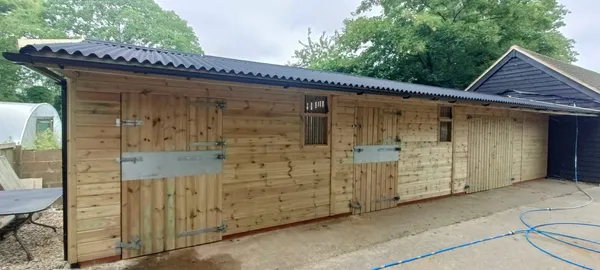
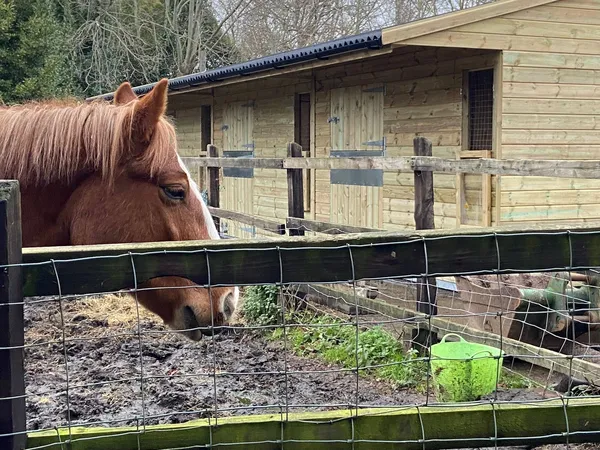
Horse stables are usually built in linear rows or in U-shaped or L-shaped layouts. Each stall and room has an external door that opens to the outdoors. Facilities can be incorporated into a stable block or built separately.
So, while you can access all the stalls and rooms inside a barn from inside the building, you need to walk outdoors when moving between the stalls and rooms of a stable block.
Learn more about the different layouts in our guide to choosing your ideal stable block.

While the size of your land area and the number of horses you want to house affect your decision, many factors come into play.
Consider these factors when choosing between an American barn and a block of stables.
How private and secure do you want your equestrian building to be?
American barns can be locked as a single unit. Simply lock the sliding door to keep it secure. Moreover, you can enjoy total privacy while taking care of your horses.
Stables have multiple access points, so you need to lock each stall and room individually, which can take time. People will be able to see you when you move between the stalls and rooms.
How quickly and smoothly do you want to handle horse care tasks?
American barns are designed for efficiency. You can visit, feed, prepare, and groom the horses without stepping out of the building. And you can check on all the animals at once, which saves time.
Some modern American barns feature amenities such as automatic waterers and climate control, which help streamline horse care further.
Stables are less convenient. You need to move between stalls and rooms, spending all your time outdoors. This might be more enjoyable in the spring and summer, though.
Do your horses fare better when interacting at all times or when they can have some alone time?
Social interaction is key to a horse’s mental wellbeing. However, horses have different personalities. Some do not get along, while others are shy or nervous.
American barns are designed so horses live in close proximity. They can see, hear, and sometimes even touch each other through stall grids. This boosts social interaction. However, nervous horses might become stressed and anxious.
Stables provide both personal space and social interaction. Overall, the stable block life is quieter and more private.
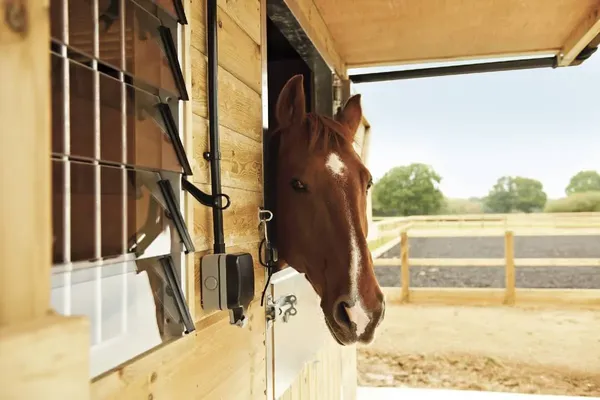
However, the animals control how much engagement and stimulation they get. If they look out of the windows or talk grilles, they can see life go by and other horses. If they stay inside, they can enjoy some quiet time. This setup is especially great for nervous, shy, and territorial horses.
Stable design can affect how well horses settle and rest. Read our guide to designing stables for rest and relaxation.
%20AMB%20230721%204%20Megan%20Cooper%20(1).avif)
Do you prefer to work outdoors, rain or shine? Or would you rather you and your horses were sheltered from the elements?
American barns offer full weather protection. You are all under one roof once you get back to the barn. So you can perform horse care without getting drenched, frozen, or too hot.
Stables, on the other hand, have limited weather protection. You will need to work outside in the rain, snow, hail, and heat.
You can lower weather exposure by adding a walkway canopy or central shelter where the horses can be groomed out of the elements. Make sure you extend the roof eaves to provide shelter for them, too.
How big an area can you build on?
American barns have a much larger footprint than horse stables. However, they house all stalls and rooms under one roof. So, they are usually built in a rectangular area.
Traditional stalls are more spread out and can be less space efficient. A stable block may take up as much space as an American barn but house fewer horses.
%20AMB%20230721%206%20Megan%20Cooper%20(1).avif)
How much effort do you want to put into ventilation?
Ample ventilation is critical to horse health, letting dust and moisture out and preventing respiratory issues.
American barns generally offer less ventilation, as they aren’t as open. However, if you design yours well, you will be able to provide your horses with plenty of fresh air.
Ensure each stall has an outdoor-facing window or even a door, and include plenty of ventilation grilles throughout the building. Finally, open the main door at least once a day.
Traditional stables generally offer plenty of natural ventilation and sunlight because of their open design.
What’s your budget?
Naturally, American barns tend to be more costly. That is because they have a bigger footprint and additional structural requirements. However, when you own several horses, the time saved and the comfort gained can offset the initial price.
Stables are more economical, especially if you build them incrementally in phases, adding new stalls when you have the budget.
To help you plan your budget, here are some of our starting prices for American barns and traditional stable blocks:
The final cost will depend on the size, layout, specification and optional features you choose.
How big and tall of a building can you erect? Are you building on residential or agricultural land?
Because they are taller and larger, American barns may have more planning requirements than traditional stable blocks.
However, the requirements for either building depend on its size, location, intended use and the classification of the land.
Some private stables built within the grounds of your home may be covered by permitted development rights, but many equestrian buildings still need planning permission.
Our guide to planning permission for stables explains when you may need approval and what to check before building.
Always check with your Local Planning Authority before building, especially if your site is within a designated area.
Both American barns and traditional stables make for fantastic homes for horses and ponies. Whether you choose one or the other depends on your needs.
If you have a small number of horses and want to keep the initial cost down, a traditional stable block may be the best option. If you care for several horses and value convenience, security and year-round weather protection, an American barn may be more suitable.
At Chart Stables, we build both stable blocks and American barns. You can customise yours with different-dimension stalls, a wash bay, a hay store, a tack room, a feed store, windows and doors, as well as your preferred roofing, cladding, and lining materials.
We will provide you with a dedicated, experienced planner who will tailor your equestrian building to your specifications, needs, preferences, and budget.
Is there a difference between a stable and a barn?
Yes. An American barn houses several stalls and other facilities within a single enclosed building. Traditional stables usually have individual doors that open directly outdoors.
Are horses kept in barns or stables?
Horses can live in either. Traditional stable blocks and American barns both contain individual stalls designed to keep horses safe and comfortable.
What do Americans call a stable?
In the US, people commonly call the whole building a barn and the individual spaces inside it stalls.
Is an American barn better than traditional stables?
It depends on your horses, site, routine and budget. American barns offer more convenience, security and weather protection. Traditional stables usually cost less and provide more natural ventilation and personal space for each horse.