You usually need planning permission to build permanent stables in Surrey. Some private stables may fall under permitted development rights.
You may not need permission for a mobile field shelter if it remains movable, is not fixed to the ground and is used to shelter grazing animals.
Your location will affect how your plans are assessed. Much of Surrey lies within the Metropolitan Green Belt. The Surrey Hills National Landscape also receives additional protection.
How you plan to use the stables matters too. Different rules may apply if you intend to use them for livery, lessons, breeding or another business.
Additional restrictions may apply in conservation areas, including parts of historic towns such as Farnham. You may also need listed building consent if your plans affect a listed building or another protected structure within its grounds.
Our guide to planning permission for stables explains the general rules in more detail.
Your district or borough council will usually handle the application. This may be Waverley, Guildford, Mole Valley, Tandridge or another Surrey planning authority. Use Surrey County Council’s planning page to find the correct one.
If your property lies within the Surrey Hills, your design should suit the surrounding landscape. The Surrey Hills planning guidance explains what local authorities consider.
In this article, we explain how to choose materials and design features that suit your Surrey property.
Here are the Chart Stables team’s top tips for building a stable block that fits well in its Surrey setting.
Tile-hung cottages, medieval churches, Georgian townhouses and historic castles shape the character of Surrey’s towns, villages and rural areas. Timber stables can work well in this setting.
Choose a design that complements the historic architecture around your property. A traditional design may fit more comfortably with local planning policies, although it does not guarantee approval.
Features found in Surrey’s historic architecture include:
Observe the area around your home to determine which features are common and choose design elements that complement them.
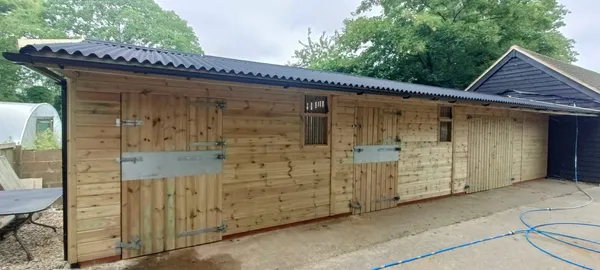
Choose timber weatherboard cladding to give your stable block a more traditional look. This cladding technique involves installing long, overlapping boards to protect a building’s exterior walls from the elements. It is common in historic and rural architecture.
Depending on its finish and exposure, timber cladding can weather to a silver-grey colour over time.
Design a roof that complements the style of the roofs near your home.
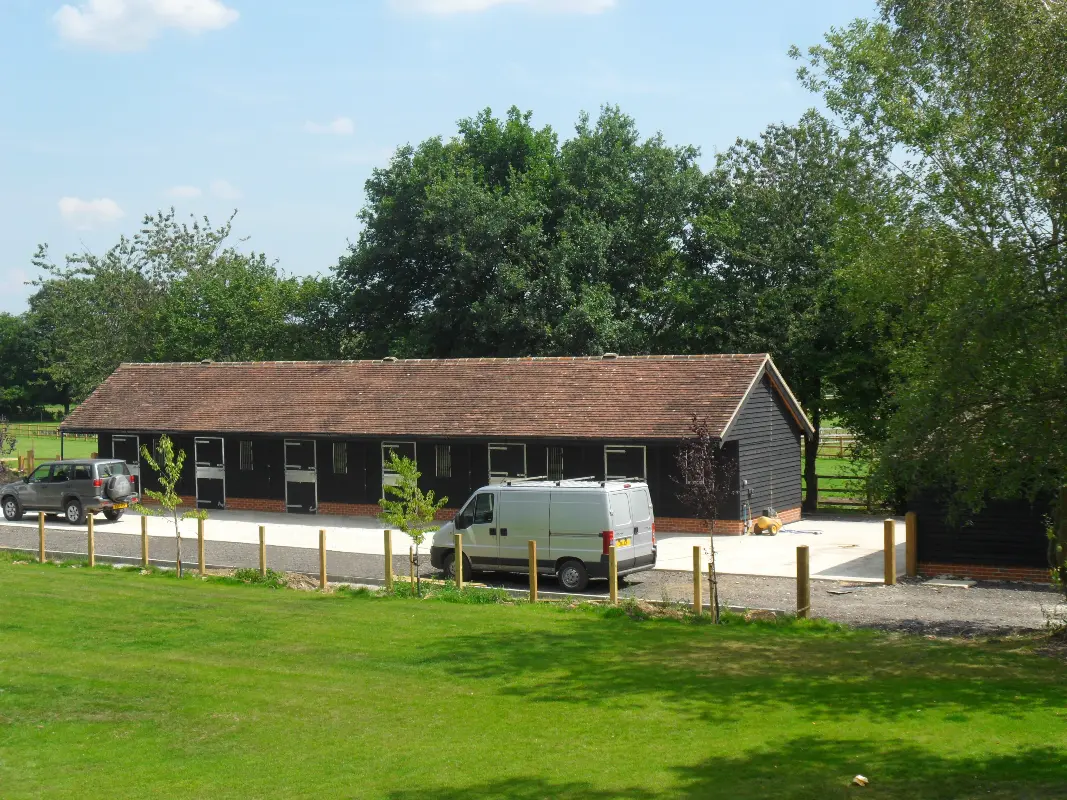
If your property is in an area with historic buildings featuring steeply pitched hipped roofs, consider a steeper angle, such as the 35° roof on our Chester Tiled Roof Stables. Choose a covering and colour that complement the surrounding buildings.
If buildings with gabled roofs surround your property, choose a roof pitch, finish and colour that work with them. Options include cedar shingles, shaded red Onduvilla, clay tiles and slate tiles.
If your property is near a thatched building, ask your Local Planning Authority or conservation officer which pitch and roofing materials would suit the setting.
Our guide to the best horse stable design features can help you choose suitable roofing, cladding, doors, windows and other additions
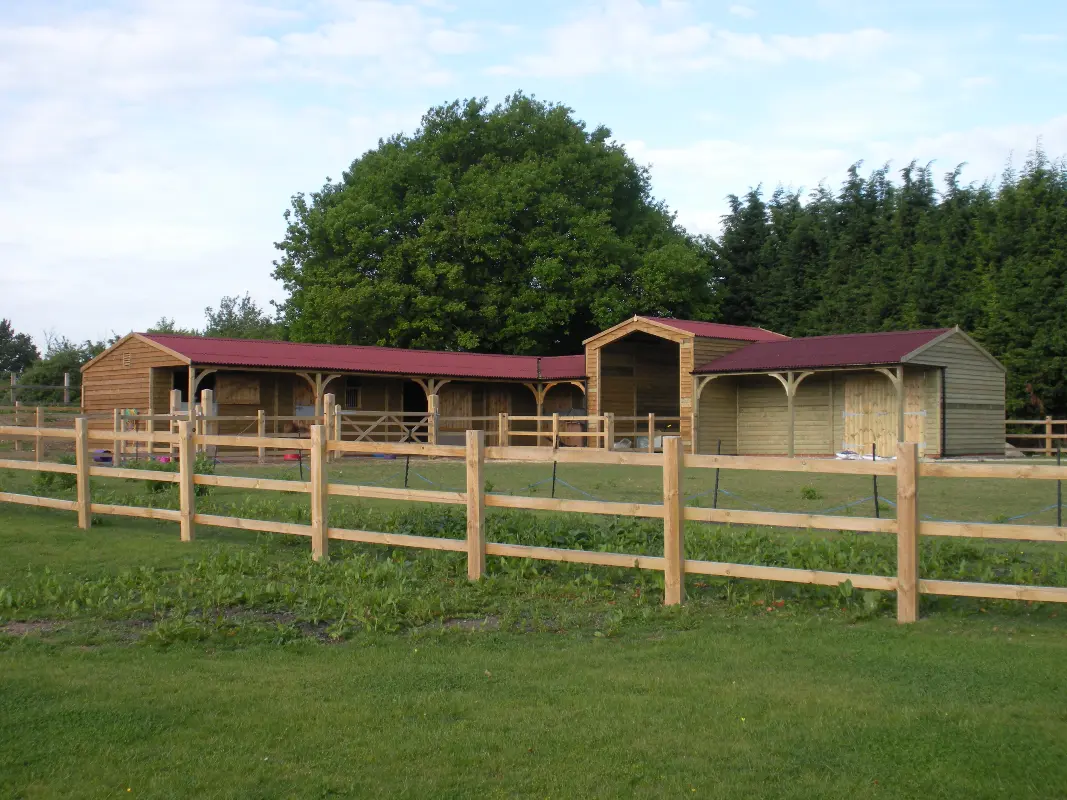
If your property is outside the Green Belt, the Surrey Hills National Landscape or a conservation area and is not a listed building, you may have more flexibility over the stable design.
Clad the exterior walls with either shiplap or weatherboarding. Choose shiplap cladding for a more modern, simple look, or opt for weatherboarding for a traditional appearance.
If the stable block is close to your home, choose a pitch and covering material that complement your home’s roof.
Popular roof covering options include:
When installed with suitable roof lining, Onduline can help reduce the sound of rain inside the building.
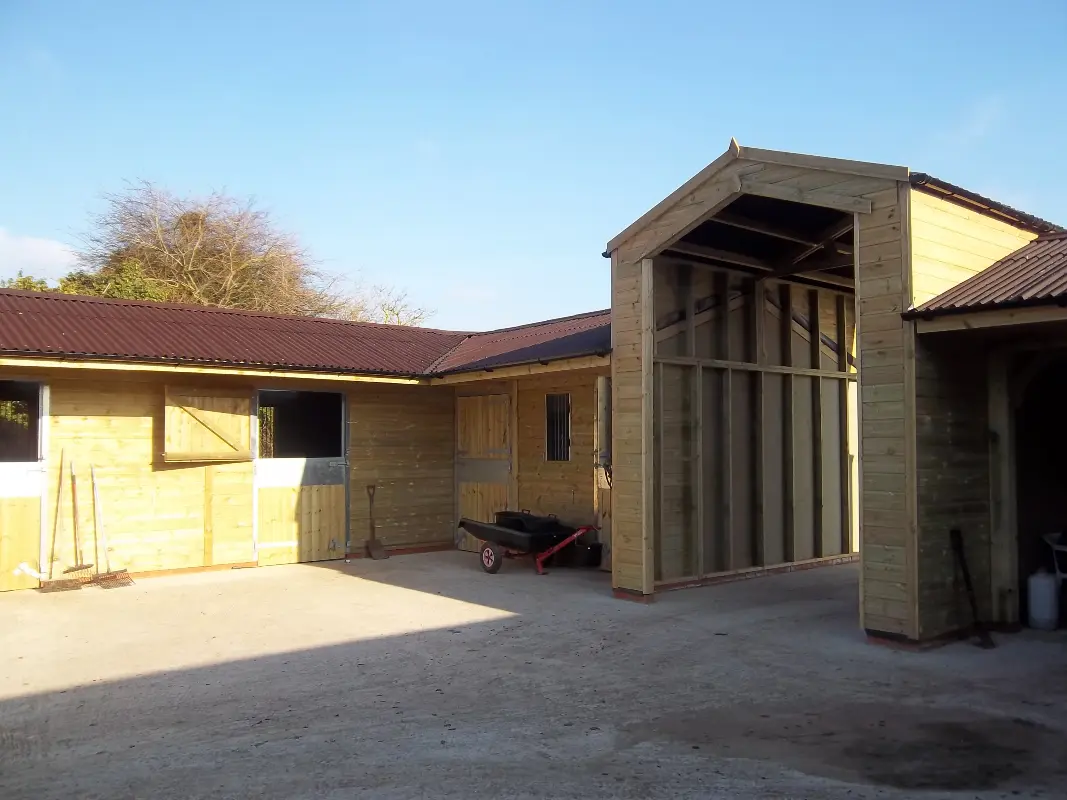
At Chart Stables, we design, deliver and install custom timber stables throughout Surrey. Our buildings look at home in rural, historic and urban settings alike.
Our sturdy wooden stables come as fixed and mobile blocks. Our fixed stables are available in the Clipper, Chart and Chester ranges. Our mobile stables come in the Clipper and Chart ranges.
The Chester Stables have a standard roof pitch of 35° and can be prepared for clay or slate tiles installed by your chosen roofing contractor, making them ideal for properties in historic settings. You can also extend the canopies to 1.8 metres (6 feet) to provide additional weather protection. Extended canopies come with 150mm × 150mm support posts, strengthened headers and traditional curved bracing.
The Chester and Chart ranges come with talk grilles between the stables as standard.
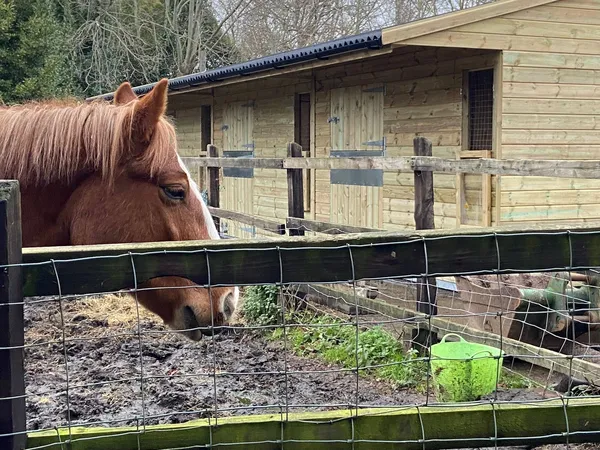
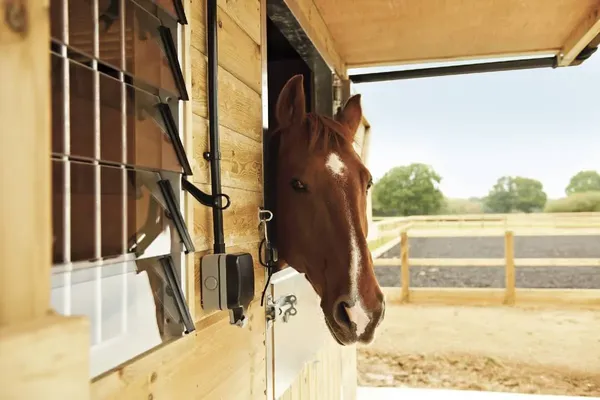
Our fixed and mobile stables are built from pressure-treated timber and feature kickboarding, sturdy stable doors, opening windows and anti-chew protection.
Our timber stables are built to order, so you can customise the size and configuration. Choose the number of boxes, the type of doors and the structure’s shape. You can also add a tack room, wash bay or hay store.
We offer both shiplap and weatherboard cladding to suit your property and preferred finish.
We can deliver and install your stables or supply a DIY kit to lower the unit cost. Contact the Chart Stables team to discuss your Surrey property and start planning your stable block.
Can I build stables in the Surrey Green Belt?
You may be able to build stables in the Green Belt, but stricter planning policies apply. Your local authority will consider the building’s size, location, use and effect on the openness of the Green Belt.
Can I build stables in the Surrey Hills National Landscape?
You may be able to build stables, but the design will need to respond carefully to the protected landscape. Your local authority will consider the building’s position, scale, materials and effect on the surrounding area.
Which planning authority covers my Surrey property?
Your district or borough council will usually handle the application. Use Surrey County Council’s planning page to find the correct authority.
What stable design suits a historic Surrey property?
Weatherboard cladding and a pitched clay or slate-tiled roof can complement many historic and rural properties. However, the right design will depend on the buildings around your site and any local planning requirements.
Does Chart Stables deliver and install in Surrey?
Yes. Chart Stables designs, delivers and installs fixed and mobile timber stables throughout Surrey. DIY kits are also available.