Good stable design creates a safe, quiet and predictable environment where horses can settle and rest. The position of each box, noise levels, ventilation, natural light, flooring and bedding all affect how comfortable a horse feels.
Every horse is different. Some relax when they can see their neighbours, while others prefer a quieter box away from busy areas. In this guide, we explain how to design stables around your horses’ individual needs.
Horses are highly sensitive to what happens around them, and their behaviour inside their box often reflects the atmosphere of the wider yard. Sudden noise, busy walkways, or constant visual movement can keep a horse alert rather than allowing it to settle, making it harder to achieve proper rest.
Even small disturbances can disrupt their routines. When these repeat throughout the day, horses can become more vigilant, tense, or easily irritated.
When their surrounding feels predictable and quiet, horses are far more likely to unwind and remain settled. Planning your stable design with these factors in mind makes that possible.
The position of a stable block significantly affects how peaceful it feels. Placing horse stables away from high-traffic areas, machinery, or parking reduces disruption.
Orientation also plays a role: positioning doors and windows towards the quieter side of the property limits visual distractions.
If the block has to sit closer to busier parts of the yard, an L-shaped or U-shaped design can help form a sheltered courtyard by buffering noise, wind, and through-traffic.
For more information, read our guide to choosing the best location for horse stables.
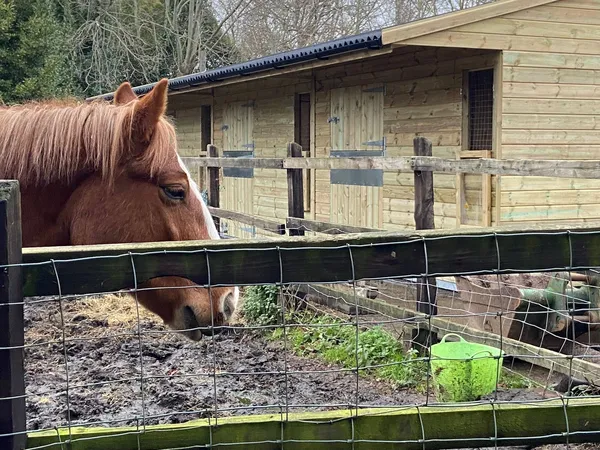
Sightlines matter, too. Horses feel more at ease when they can see their neighbours and understand what’s happening around them.
Grouping boxes in a tucked-away section of the block lets horses see what’s going on without being overwhelmed, and avoids the unsettled feeling that comes from being opposite busy entrances, feed rooms, or main walkways.
There’s also a social aspect to consider. Most horses like knowing they’re not alone and feel calmer when they can see or hear a horse they know, especially if they share a routine.
Read our stable design advice from professional rider Daniel Watson.
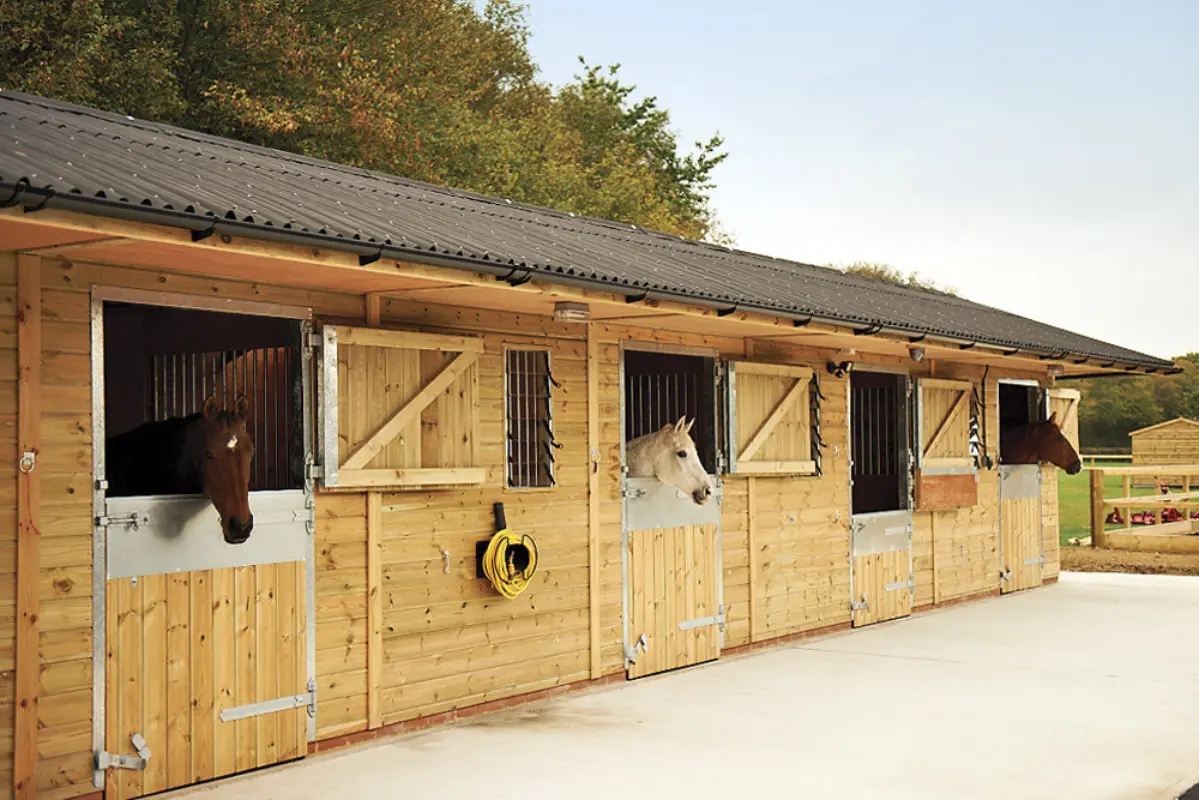
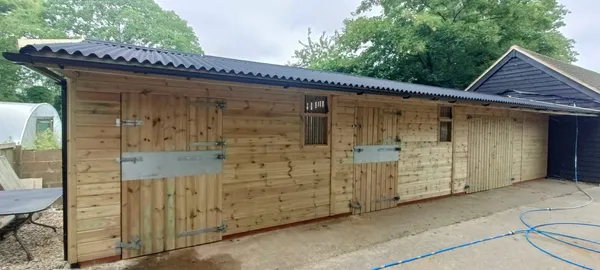
The materials used to build the stables can significantly affect the atmosphere inside a block. Timber naturally softens sound, helping to reduce echo and create a quieter, more comfortable interior.
Thick framing, secure door fittings, and sound-softening roofing can make a noticeable difference. They prevent sudden clatters from travelling through the block and the edge off routine movement, weather, and yard activity. These features also help reduce temperature swings, making the stable feel more consistent throughout the day.
Solid partitions and generous overhangs offer an extra layer of protection.
Predictable routines help horses feel secure, so feeding, turnout, and mucking out at regular times can make the entire block feel more settled. Gentle handling and consistent yard routines also reduce sudden noise or rushed movement that might unsettle horses in their boxes.
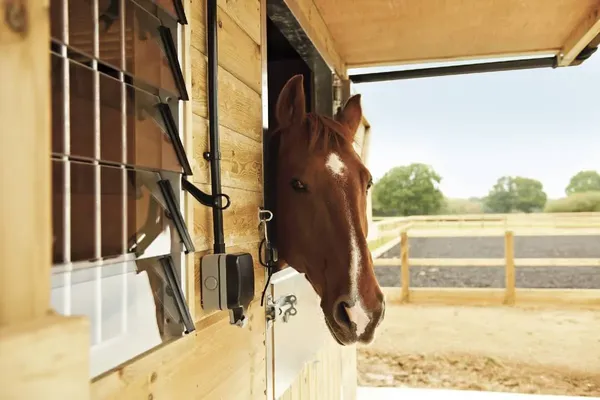
Good ventilation is essential. Continuous airflow keeps the atmosphere fresh, reduces heat build-up, and prevents irritants from lingering, all of which help horses stay relaxed.
Comfort plays a part, too. According to the British Horse Society’s stable safety guidance, each box should give the horse enough room to turn, lie down and get up comfortably. Keep the floor even and non-slip, and cover it with suitable bedding or matting.
Finally, natural light contributes to a calmer environment by helping horses keep track of the time of day and making the interior feel open rather than confined.
Read our guide to choosing the right stable size for different horses and ponies.
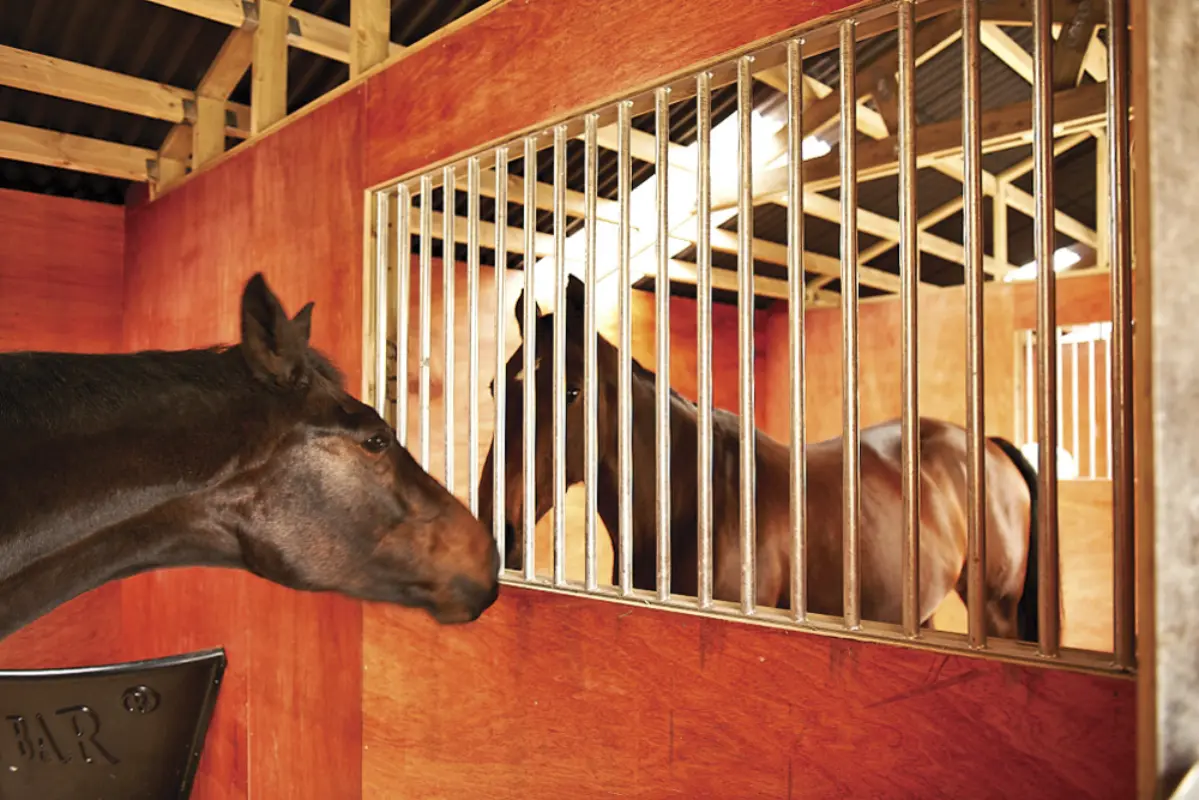
Chart Stables incorporates many of these principles directly into the way we build our timber stables.
Strong 100mm × 50mm framing and high-quality cladding create structures that don’t rattle or echo, helping horses feel more secure.
You can add optional American Barn Top Doors that let you close off part of the building at certain times of day, allowing horses to turn toward the less-busy side of the yard and reducing visual stress.
Louvre windows, top-and-bottom doors, and generous eaves help keep the air moving.
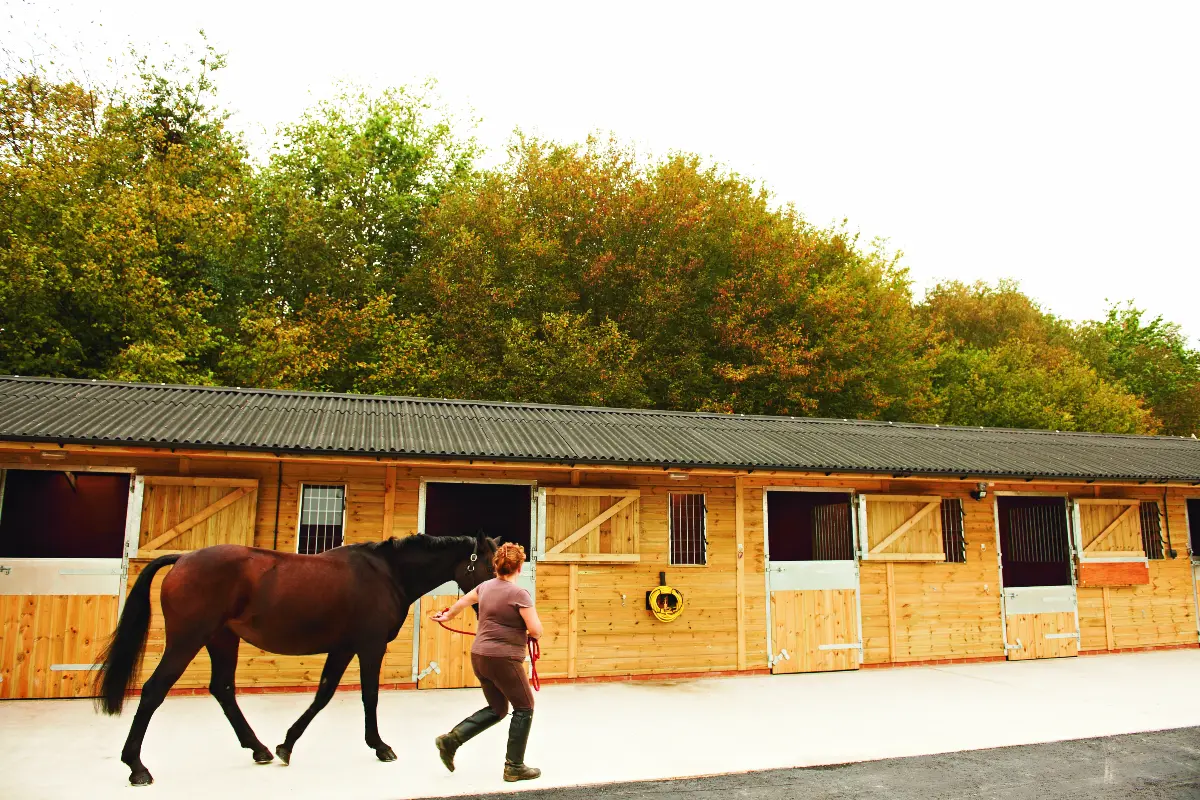
We offer a choice of stable layouts, including straight runs, L-shapes, and U-shapes. These designs help create natural buffers and make it easy to position busy areas, such as tack rooms or wash bays, away from the quieter parts of the block.
Our roofing options, such as Onduline or Onduvilla lightweight tiles, make the sound of rain much softer than harder roof surfaces, which helps reduce the sudden noises that can unsettle horses.
Standard 1.2m kickboarding, anti-chew strips, and secure fittings complete a safe, peaceful environment where your horses can relax and rest properly.
Thoughtful design creates stables that feel quiet, predictable, and comfortable. If you’re planning a new block or updating an existing one, Chart Stables can advise on layouts and features that support a calmer environment for your horses, based on their personalities.
You can start by designing your own stables to request a quote or get in touch with our team for practical advice. You can find our price list here.
How does stable design affect a horse’s rest?
A quiet, well-ventilated stable with enough space, natural light and comfortable flooring can help a horse feel safe and settled. Box position and social contact also make a difference.
What is the best stable layout for a calm horse?
The best layout depends on the horse’s personality and needs. Some horses relax when they can see or hear their neighbours, while others prefer a quieter box with fewer distractions.
Which materials are best for horse stables?
Choose strong, secure and easy-to-maintain materials that help limit noise. Timber framing, non-slip flooring, secure fittings and suitable roofing can create a safer and quieter stable.
How much bedding does a horse need?
Provide enough clean, dry bedding to create a cushioned resting area and protect the horse from hard flooring. The amount will depend on the bedding material and the needs of the horse.