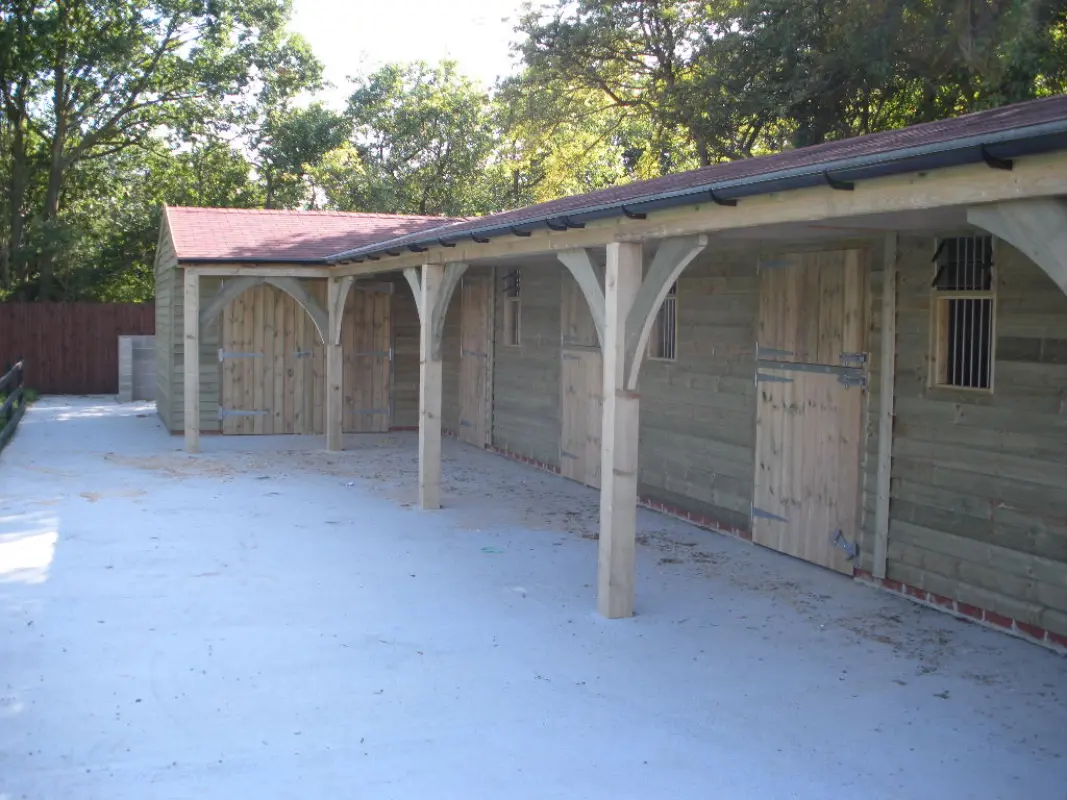
The most worthwhile stable upgrades improve the building’s strength, ventilation, weather protection and everyday practicality. The right options will depend on your horses, yard routine, location and budget.
Suitable box dimensions, safe flooring, ventilation and lighting should form the basis of every stable design. Upgrades build on these essentials by improving the building’s durability, practicality and suitability for individual horses.
Some features covered below come as standard with certain Chart Stables ranges but may be optional upgrades elsewhere. Others are additional features you can choose to suit your horses, property and budget.
Comparing what each stable specification includes will help you understand the overall value.
Below, we explain the benefits of each feature and where it may be worth adding to your stable design.
Timber framing provides a sturdy structure that can withstand the elements and support your wooden stables.
A thicker frame provides greater structural stability and durability. It can also accommodate larger spans, allowing you to design open, airy stalls and rooms with fewer internal supports.
At Chart Stables, we offer timber framing up to 100mm × 50mm. Our Chart, Chester and Chester Tiled Roof stables come with high-quality 100mm × 50mm timber framing.
If you can only afford one upgrade, consider thicker timber framing. It can help extend the working life of your stable block.
Compare the framing and specifications included across our Clipper, Chart and Chester stable ranges here.
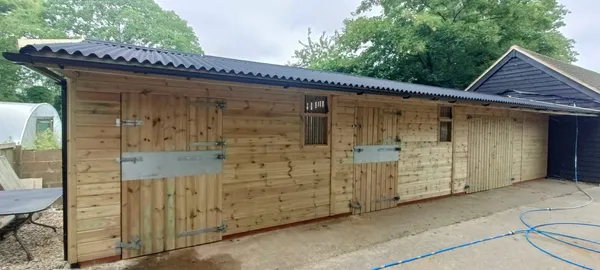
Overlapping weatherboards are fitted horizontally to create a weather-resistant barrier that protects the underlying structure from the elements, improving the building’s longevity.
If well maintained, weatherboarding can last for many years. Regular treatment or staining helps preserve the wood’s natural beauty and protects it from moisture and sunlight. Moreover, individual boards can be replaced without affecting the rest of the wall.
Finally, weatherboarding is beautiful to look at. It gives your stables’ external walls a traditional feel, and the natural variations in wood grain and colour are particularly pleasing.
At Chart Stables, you can upgrade your stables with sawn-tapered, overlapping weatherboarding. It is available in 22mm × 150mm or 32mm × 175mm boards.
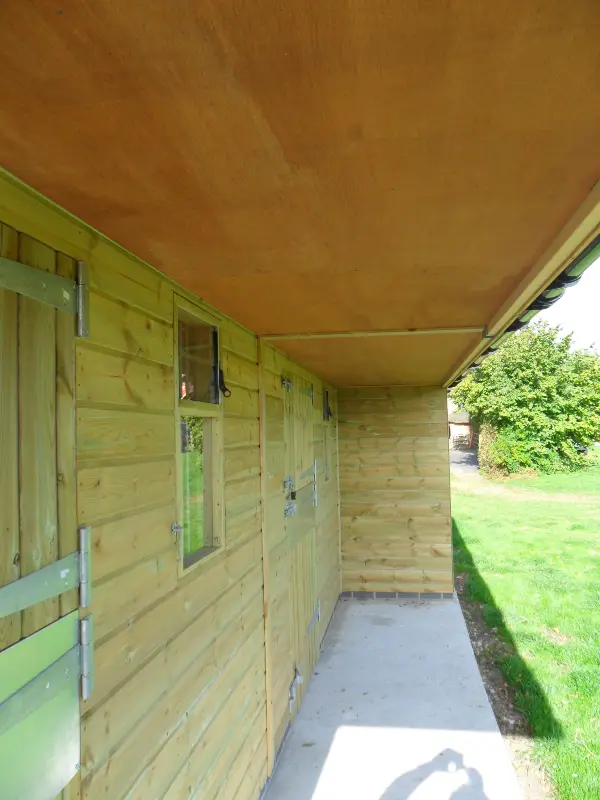
Adding rear doors enhances cross-ventilation and natural airflow.
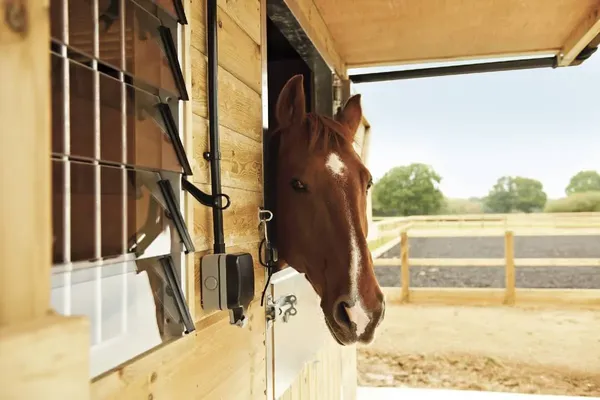
Good ventilation is essential for maintaining a healthy, comfortable environment for your horses and helping to prevent the build-up of ammonia and condensation. A rear opening allows fresh air to circulate through the building while helping to regulate temperature and humidity levels.
At Chart Stables, we can install fully framed rear doors with galvanised fittings and secure bolts to improve airflow without compromising safety.
Read our guide to stable ventilation for more ways to improve airflow.
If your stable block is not very close to your home, having a dedicated space to store and organise supplies and horse-riding equipment inside your stables is useful.
You will always have saddles, bridles, helmets, grooming tools and other equestrian gear close at hand, so you will not need to head back to your car or house to fetch equipment.
Moreover, a tack room is a great place to arrange, clean and maintain all your gear. As it is located inside the stables, you also get to spend more time around your horses and ponies.
Chart Stables’ tack rooms are spacious and designed to be practical. They come with robust doors that you can secure with a long-throw or rim lock, helping to keep your equipment safe.
If you’re building a home for a bigger horse, you may need to upgrade the stable doors.
Larger horses may need more headroom to enter and exit the stables and to look out while they spend time inside. They can also place greater force on doors, so choose a particularly sturdy option, such as a completely encased metal-framed door with anti-chew stripping.
Our Chester stable doors are 2.23m (7ft 4in) high, hung in a metal frame and completely encased in galvanised anti-chew stripping. They are also ledged, braced and lined with ply kickboarding. These premium doors provide additional protection against kicking, making them ideal for larger or lively horses.
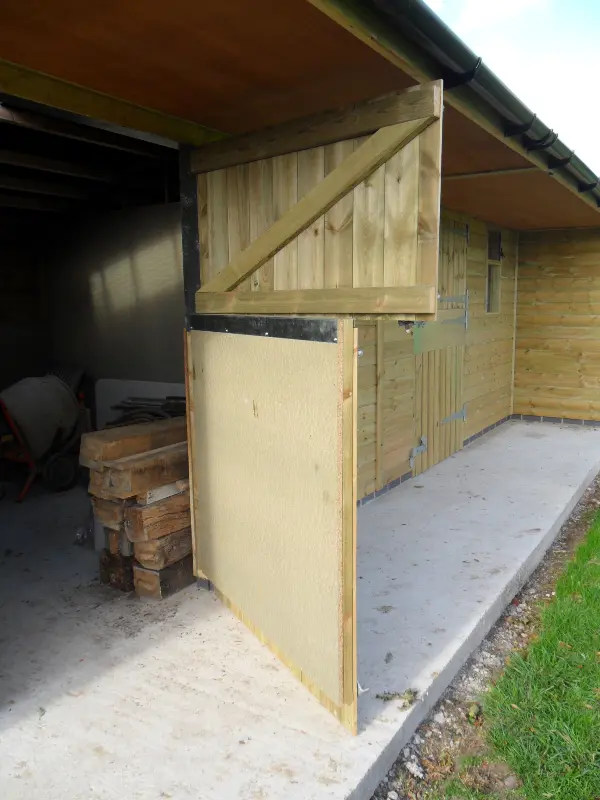
Kickboarding protects your stable walls from impact damage caused by horses kicking or pawing.
Fitted around the interior walls, it absorbs impact and helps prevent splintering and structural wear. It also creates a smoother, safer surface inside each stall.
At Chart Stables, we offer high-quality ply or OSB lining that is easy to clean and long-lasting. Our stables include kickboarding to at least 1.2m as standard, which you can extend to eaves height for additional protection.
Roof and ridge vents help stale, warm air escape naturally. This upward airflow complements side openings and helps keep the air inside your stables fresh and dry.
Ridge vents are especially beneficial in larger or enclosed stable blocks, as they help reduce condensation and improve overall air quality.
Chart Stables incorporates ventilation into every design to support effective airflow.
If you want your timber stable block to look even more charming, choose cedar shingle roofing.
Cedar shingles are known not just for their beauty but also for their durability. The natural oils in cedar help the shingles resist moisture, insects and decay. With the right installation and maintenance, they can last for many years.
Cedar shingles also provide some natural insulation and give timber stables a traditional finish.
At Chart Stables, you can upgrade your roofing to cedar shingles, which we install for you.
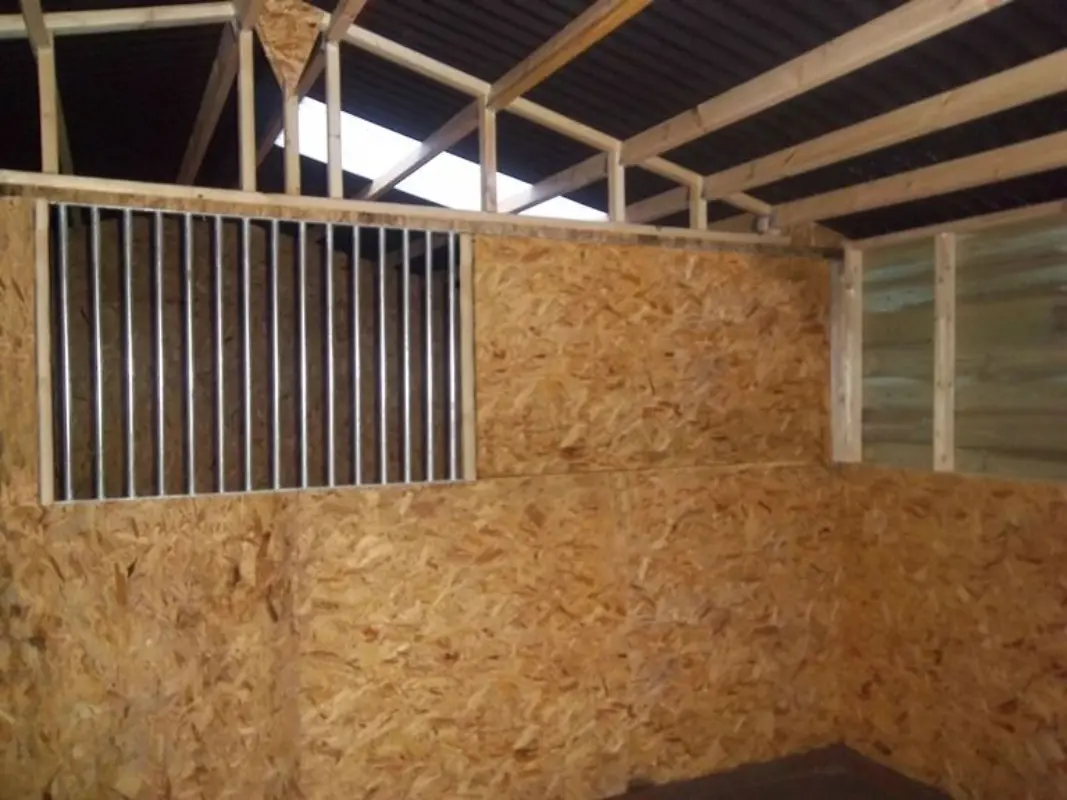
A canopy provides shade and protection from rain, creating a sheltered area outside the stables where you and your horses can stand comfortably in different weather conditions.
It also helps keep bedding dry by reducing the amount of rain that blows through open doors.
All Chart Stables stable blocks include a 1.2m (4ft) front canopy with guttering as standard. You can extend the canopy to 1.8m (6ft) and upgrade it with 150mm × 150mm (6in × 6in) support posts, strengthened headers and elegant curved bracing.
Learn how canopies, ventilation and insulation can help keep stables comfortable throughout the year.
Increasing the eaves height of your stables gives your horses more headroom and supports internal airflow. It provides more space for warm air to rise and, when combined with suitable vents and openings, helps maintain a cooler, well-ventilated environment during the summer months.
The Chester range has an eaves height of 2.46m, providing additional headroom and supporting air circulation throughout the year.
If you are still planning the overall building, use our stable pre-build checklist before finalising your upgrades.
At Chart Stables, every stable block is built to suit your horses, property and daily routine. You can choose boxes of different sizes and add practical spaces such as a wash bay, hay store or tack room. You can also select your preferred doors, windows, roofing, cladding and lining materials.
Our team has decades of experience designing horse stables. A dedicated stable planner will work with your requirements, preferences and budget to help you choose the right layout, specification and upgrades for your project.
Explore our wooden stables or contact the Chart Stables team to discuss your plans.
Are cedar shingles worth adding to a stable roof?
Cedar shingles can be worth adding if you want a traditional finish and a durable natural roofing material.
What is the best stable upgrade for a limited budget?
Prioritise features that improve safety, strength and ventilation. The best choice will depend on what your chosen stable range already includes and your horse’s needs.
Which upgrades should I consider for a larger horse?
Consider a suitably sized box, increased headroom, a sturdy metal-framed door and additional kickboarding. Base your choices on the individual horse’s size, strength and behaviour.
Which stable upgrades improve ventilation?
Rear doors, roof or ridge vents and increased eaves height can all support airflow. Their effectiveness will depend on the stable’s overall design and the position of its openings.
Can you add upgrades to existing horse stables?
You can add some features, such as kickboarding, rear doors or extra ventilation, to an existing building. Structural changes, including thicker framing or increased eaves height, are easier to include in the original design.