Older horses need a safe, comfortable stable that reflects their individual health, mobility and routine. Thoughtful design can also make their daily care easier as they grow older.
In this article, we explain how thoughtful stable design can support horses in later life.
Consider:
Ageing affects every horse differently. Older horses go through physical changes that can affect how they move and respond to their surroundings.
According to the British Horse Society, conditions such as arthritis and PPID become more common with age. Arthritis can affect movement, while dental wear may change a horse’s feeding needs. Some older horses may also become more sensitive to changes in temperature, dust and poor air quality.
Senior horses often benefit from routine and familiarity. Sudden environmental changes, poor footing or changes to turnout can cause stress. Some may also spend more time stabled during winter, making the quality of their environment particularly important.
Thoughtful stable design can support their comfort and quality of life.
Tight turns, raised thresholds, or narrow doorways can put senior horses under unnecessary strain. A clear, open internal layout allows the animal to turn, lie down, and get up with greater confidence.
Make doors wide enough to prevent contact with the frame and keep thresholds flush to reduce tripping.
Position feed and water to limit bending and twisting, especially for horses with neck or shoulder stiffness. Provide space to handle multiple buckets, so feeding routines remain calm and organised.
Use level surfaces and smooth transitions to support confident footing, especially in winter.
Older horses with stiff joints or reduced balance can take longer to steady themselves when turning or rising, so uneven or moving surfaces can reduce their confidence.
Choose flooring that supports joints and improves grip. Start with a level, well-prepared base and keep the surface consistent throughout the stable. Use non-slip flooring to prevent slips.
Rubber matting can add cushioning, ease pressure on stiff joints, and make mucking out easier. Cover it with suitable bedding to provide additional comfort and absorb moisture.
Control drainage carefully. Damp floors increase the risk of slipping and can affect hoof health. Ensure water drains properly and prevent standing water inside the stable and in the yard.
Senior horses can become more sensitive to dust, ammonia, and sudden temperature changes, especially if they have existing respiratory issues.
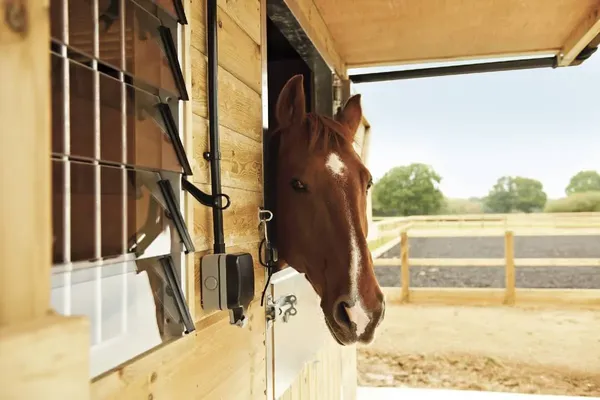
Support natural airflow with ridge vents and well-placed openings. A suitable canopy or roof overhang can also provide additional weather protection.
Do not seal the building too tightly in winter, as trapped moisture can reduce air quality, but avoid direct draughts over resting areas.
Plan for steady internal conditions. Provide shade and airflow in summer, and keep the stable dry and protected during colder months.
Learn more about keeping stables comfortable throughout the year, including ventilation, insulation and weather protection.
Older horses may have reduced eyesight, so sudden shadows or glare can unsettle them.
Keep lighting even and consistent throughout the stable block and avoid dark corners so horses can move with confidence.
Good lighting inside the stable block supports calm handling and helps you spot small changes in behaviour or movement. It should allow you to check their condition, inspect hooves, and give medication with confidence.
Senior and retired horses still benefit from suitable social contact with other horses. For some horses, isolation can increase stress and reduce confidence, especially for those used to living in a herd.
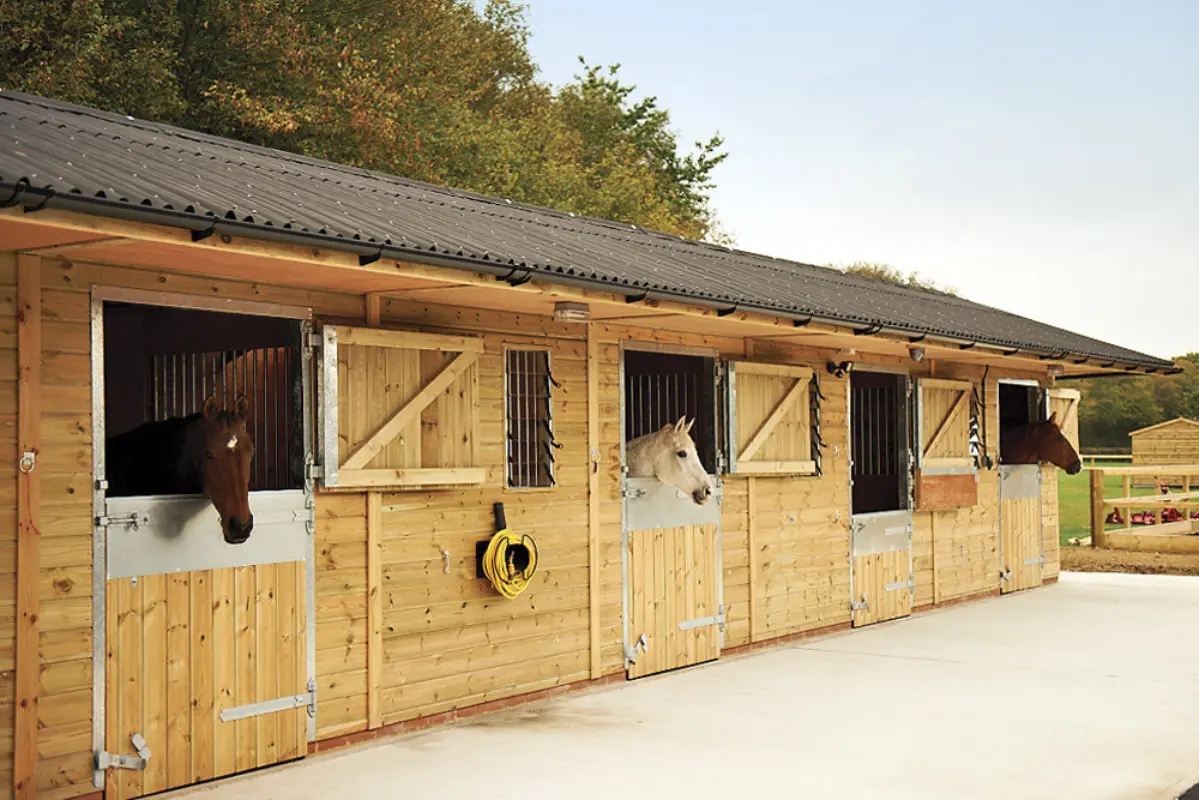
Design the stable block to support safe interaction, using partitions such as grills or open sections above solid walls.
Our guide to designing horse stables for rest and relaxation explores how layout, noise and social contact can create a calmer environment.
Retired horses still benefit from regular turnout; regular, gentle movement supports circulation and joint health.
Keep turnout areas close to the stable where possible. Long walks across the yard or to the field can increase strain, especially in winter.
Place gates and access points to avoid sharp turns and crowding, especially with mixed-age groups.
If horses live out for part of the year, build field shelters to provide weather protection.
Every older horse has different needs. At Chart Stables, we design and build bespoke timber stables around your horses, daily routine and property.
Our team can help you choose a suitable layout, flooring, ventilation and additional features to support your horses’ comfort as they grow older. We build every stable using strong, pressure-treated timber for long-term durability and everyday use.
Explore our range of timber horse stables or contact our team to discuss your plans.
What is the best flooring for an arthritic horse?
A firm, level and non-slip floor can help an arthritic horse move with greater confidence. Rubber matting with suitable bedding can provide additional cushioning and comfort. Ask your vet for advice based on your horse’s mobility and condition.
Should older horses be stabled at night?
It depends on the horse. Consider their health, mobility, routine, social needs and the weather. Some older horses benefit from a dry, comfortable stable overnight, while others remain happier living out with suitable shelter.