Design stables for nervous horses around their individual temperament and triggers. A calm position, clear sightlines, secure fittings and a predictable layout can help sensitive horses feel safer in their surroundings.
This article focuses on how stable design can reduce unexpected stimulation, support nervous horses and make daily handling easier.
Consider:
Noise, unfamiliar surroundings, isolation and too much activity can make some horses nervous in a stable. Poor air quality, slippery flooring and sudden changes to their routine may also leave them unsettled.
Horses naturally stay alert to potential threats. Machinery, vehicles, dogs or people moving suddenly around a busy yard can therefore cause stress. However, placing a horse in a quiet, isolated area may also make it anxious if it cannot see or hear familiar companions.
According to the British Horse Society, signs of stress can include restlessness, heightened alertness, calling out or trying to move away from something. In the stable, a horse may pace, paw at the floor, react to sudden sounds or hesitate before entering its box.
Every horse responds differently. Observe how your horse reacts to activity, noise and other horses before deciding where to position its box. A sudden or significant change in behaviour may also indicate pain or illness, so ask your vet for advice if you have concerns.
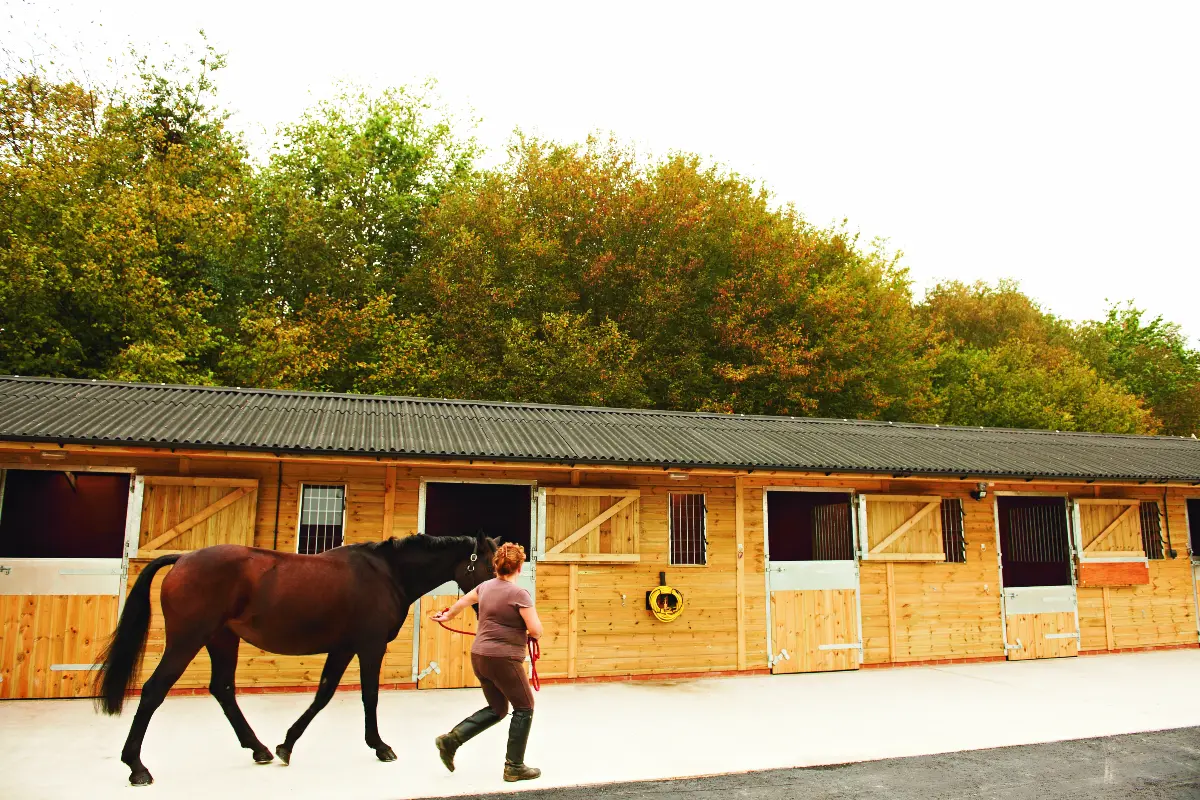
Clear sightlines can help a nervous horse see people and other horses approaching rather than being surprised by sudden activity.
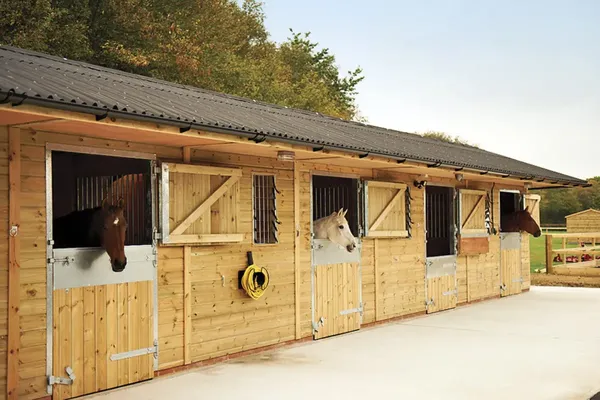
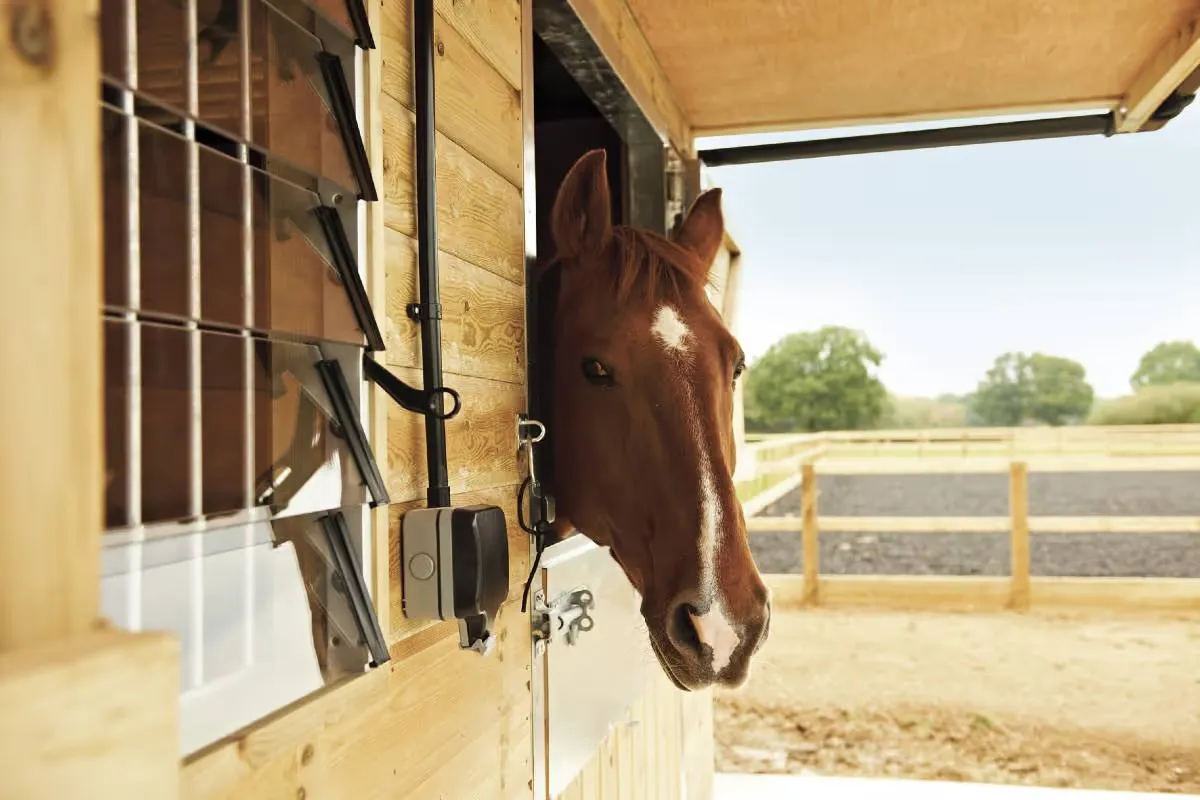
Use half doors that let horses look out, so they stay aware of activity in the yard while remaining safely contained.
However, constant activity can overwhelm some horses. Consider your horse’s temperament and provide enough privacy for them to step away from stimulation when needed.
Our guide to the best stable design features explains how talk grilles, stable doors and other features work.
Sharp contrasts between light and shadow can make it harder for a nervous horse to assess its surroundings. Allow plenty of natural daylight and use even lighting to avoid dark corners along boxes and passageways.
Loose doors, rattling fittings and sudden draughts can also cause unexpected sensations or sounds. Secure all moving parts and use well-positioned openings, ridge vents or stable windows to maintain fresh air without directing strong draughts over the horse.
For more advice, read our guide to designing horse stables for rest and relaxation.
Nervous horses may react suddenly, so you should reduce the risk of injury if they move quickly or become unsettled.
Non-slip flooring helps horses feel more confident when walking, turning, or standing inside the stable. Surfaces should remain level and consistent so horses do not encounter unexpected changes underfoot.
Install smooth internal surfaces to help prevent cuts or scrapes if a horse brushes against the walls.
It is also important that doors, partitions, and fittings are solid and secure.
Stable design can also make routines easier to manage. Keep feed, bedding, and equipment close to the stable block to reduce unnecessary movement and disruption around the horse.
Simple, clear routes between the stable, yard and turnout areas can make handling easier. Familiar routes and consistent routines can also reduce unexpected changes for the horse.
At Chart Stables, we design and build timber stables with horse welfare, durability and practicality in mind.
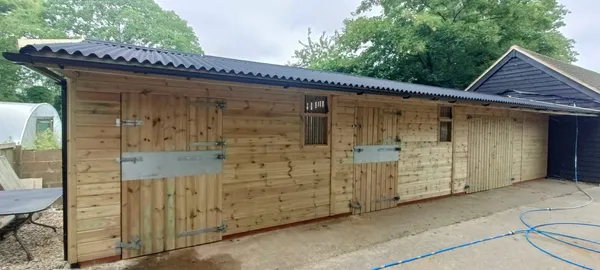
We can tailor each stable block to the horses using it and the layout of your yard. Features such as talk grilles, secure partitions, half doors and carefully planned sightlines can help balance visibility, privacy and social contact.
Explore our timber horse stables or contact our team to discuss your horses and daily routine.
How can you tell if a horse is nervous in its stable?
A nervous horse may pace, paw the floor, call out, react to sudden sounds or hesitate before entering its box. A sudden change in behaviour may indicate pain or illness, so contact your vet if you have concerns.
What helps a nervous horse?
A calm environment, consistent routine and suitable contact with familiar horses can help a nervous horse feel more settled. Reduce sudden noise and make sure the horse has safe footing, fresh air and enough visibility or privacy for its temperament. Ask your vet or a qualified equine behaviourist for advice if the behaviour continues.
How do you calm a nervous horse in a stable?
Stay calm, speak quietly and give the horse space. Reduce noise and activity around the stable, and remove the trigger if you can do so safely. Do not punish or corner the horse. If the behaviour is sudden, severe or unusual, contact your vet.
Should a nervous horse be able to see other horses?
Many nervous horses feel more settled when they can see familiar companions. However, every horse is different, and some need more privacy or fewer distractions. Talk grilles, half doors and carefully positioned boxes can help balance social contact with personal space.