Before building stables, make sure the project will work on your land, meet planning requirements and suit your daily routine and budget.
Check:
Once you know the project is feasible, read our guide to the costly mistakes to avoid when building horse stables before finalising the design and specification.
Before thinking about the design, make sure the site is suitable in practice by checking the ground conditions and access.
A firm, level and well-drained area will make the project much easier. Sloping, soft or waterlogged ground and awkward access points can lead to more extensive groundworks and ongoing maintenance issues.
Access is often underestimated. Think beyond daily use and consider how deliveries will reach the site. Installation vehicles, horseboxes and deliveries of hay or bedding need enough space to enter, turn and leave without difficulty.
Quick checks:
Sloping or wet ground does not always mean you cannot build, but it will usually require more preparation and may increase the cost of the project.
If your site has limitations, you may need to:
Our guide to choosing the best location for horse stables explains how drainage, weather exposure and access affect the site.
Whether you need planning permission and how your plans will be assessed will depend on the site, the building and how you intend to use it.
Planning rules vary by location, but a few factors come up often: the position of the horse stables, their visibility and their proximity to neighbouring properties.
Quick checks:
Certain situations can make permission more difficult to obtain. For example, building in a highly visible location or close to neighbours can raise concerns about visual impact, noise or smell. Councils may also assess new structures more closely in sensitive or historic settings.
Small changes may reduce the effect of the proposed building. You could:
Your Local Planning Authority will assess the full proposal, so check the requirements before finalising the design.
Read our guide to planning permission for stables for a more detailed explanation of the rules and application process.
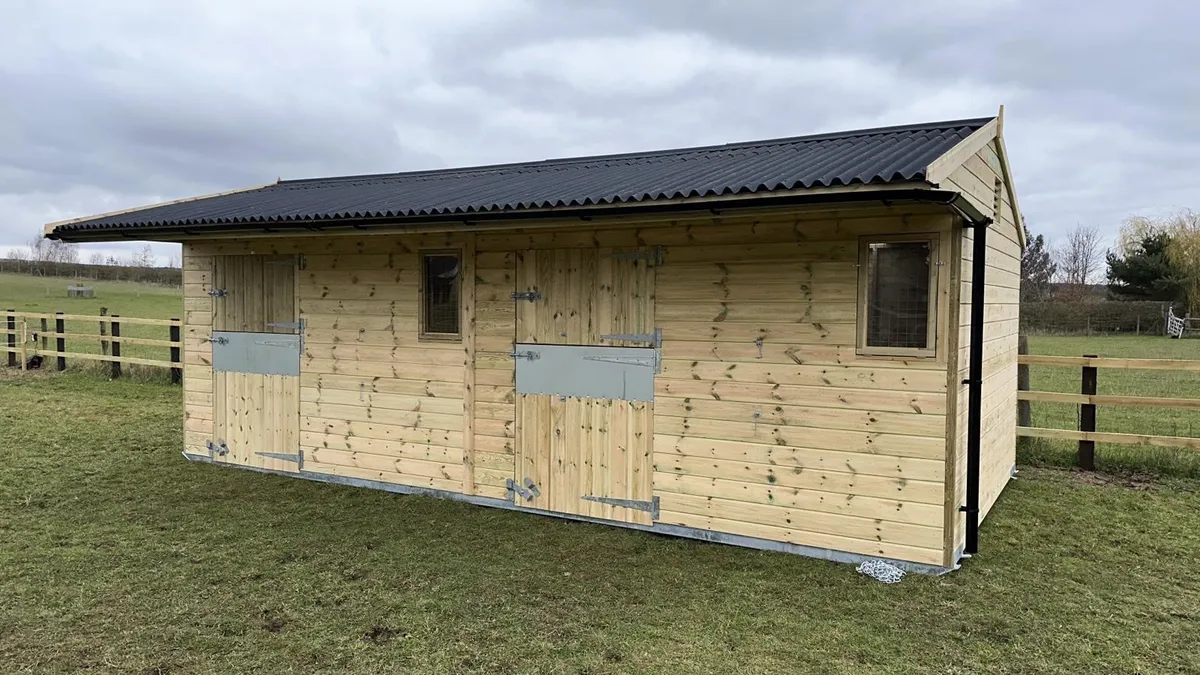
A layout that looks neat on paper can quickly become awkward once you’re moving horses, carrying water or dealing with daily tasks in poor weather.
Think about how you’ll move through the space. The aim is to keep everything simple, direct and easy to manage.
Quick checks:
On smaller sites, it becomes even more important to prioritise how the yard works rather than how it looks. A compact layout can reduce unnecessary walking, provided it leaves enough space for horses, handlers and vehicles to move safely.
Compare straight, L-shaped, U-shaped and E-shaped options in our guide to choosing your ideal stable block layout.
Before you finalise anything, it is worth looking beyond the price of the stables. The building itself is only part of the overall cost.
Ground preparation can add significantly to the budget. Levelling, drainage and the base can become costly, especially on more challenging sites. Bringing services such as water or electricity to the building can also increase costs, particularly over longer distances.
Running and maintenance costs are also part of owning horse stables, so account for them from the outset.
Quick checks:
If the project starts to feel too costly, you could:
If you plan to build in phases, make sure the initial layout allows for future additions and check whether you will need a new planning permission.
This checklist will help you assess your site, daily needs and budget. The next step is choosing a stable layout and specification that work for your horses and property.
Features such as ventilation, doors and roof overhangs affect how easy the stables are to use and how comfortable they feel.
At Chart Stables, we design and build robust, customisable timber stables around your property and daily routine. Explore our timber horse stables or contact our team to turn your ideas into a workable plan.
What should you do before building horse stables?
Check the ground conditions, access, planning requirements, daily layout and full project budget. Identifying limitations early can help you avoid expensive changes later.
Do you need planning permission to build stables?
You will usually need planning permission for permanent stables, although the rules depend on the building, land and intended use. Check with your Local Planning Authority before finalising the design. Our planning permission guide explains the main considerations.
Can you build a stable yard in stages?
Yes, you can build in stages if the initial layout leaves space for future additions. Check whether your existing permission covers all phases or if you will need another application.
What information does a stable designer need?
Provide details of your horses, preferred number of boxes, daily routine, available land, vehicle access, storage needs and budget. Site photographs, measurements and information about the ground can also help.