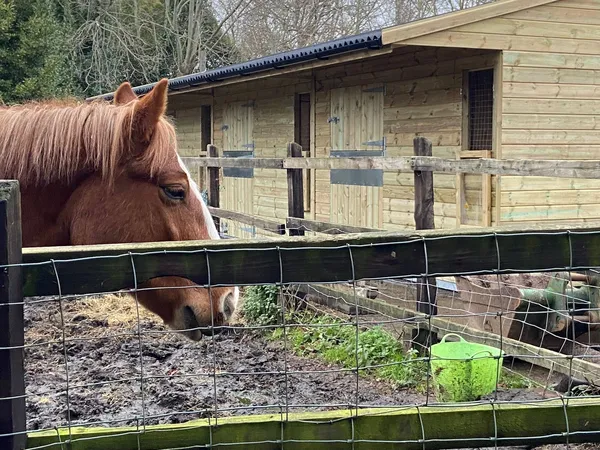
Appropriately designed horse stables are crucial to the wellbeing of your horses, ponies, or donkeys. Providing your pets with the right stall for their needs will allow them to thrive in their new home and prevent diseases, such as equine asthma.
When it comes to choosing the best design for your horse stable, it’s important to consider your animals’ needs as well as your own. Your animals need a comfortable, dry, and safe space in which they can relax, sleep, lie down, and eat for many hours at a time.
When designing each stall, you should also consider the horses' personalities and preferences. For example, if one of your horses is shy, a corner stall with high walls where they can enjoy more peace and quiet might suit them best.
Below we look at the key elements you need to think about when selecting your next horse stables.
If you have horses or mules, each stall needs to be at least 3.6m (12’) by 3.6m (12’). Larger horses require stalls that are 4.2m (14’) by 3.6m (12’), while foaling boxes have to be 4.8m (16’) by 3.6m (12’). Smaller ponies and donkeys are usually happy with stalls 3m (10’) by 3m (10’); however, more space is always appreciated, of course.
Horses, ponies, and donkeys vary in size even across breeds, so these are not fixed rules. When choosing stall size, bear in mind that your animals need to be able to lie down and roll around so they can shed their winter coat or manage an itchy irritation.
The height of the timber building is also very important. There should be a 0.6m-0.9m (2-3ft) clear space to the eaves above the ears of the standing animals. If your horses are very big, you will need to build taller stables to allow for appropriate ventilation and good air circulation.
Stalls need to be durable and robust so they can withstand the test of time. Choosing wooden stables with thick timber framing ensures the building will be a home to your animals for many years to come. Saving money on the purchase usually means replacing the stables after only a few years.
Stables also need to endure the animals kicking and chewing the walls on a regular basis. Well-built horse stables feature thick kickboarding and anti-chew strips around the doors.
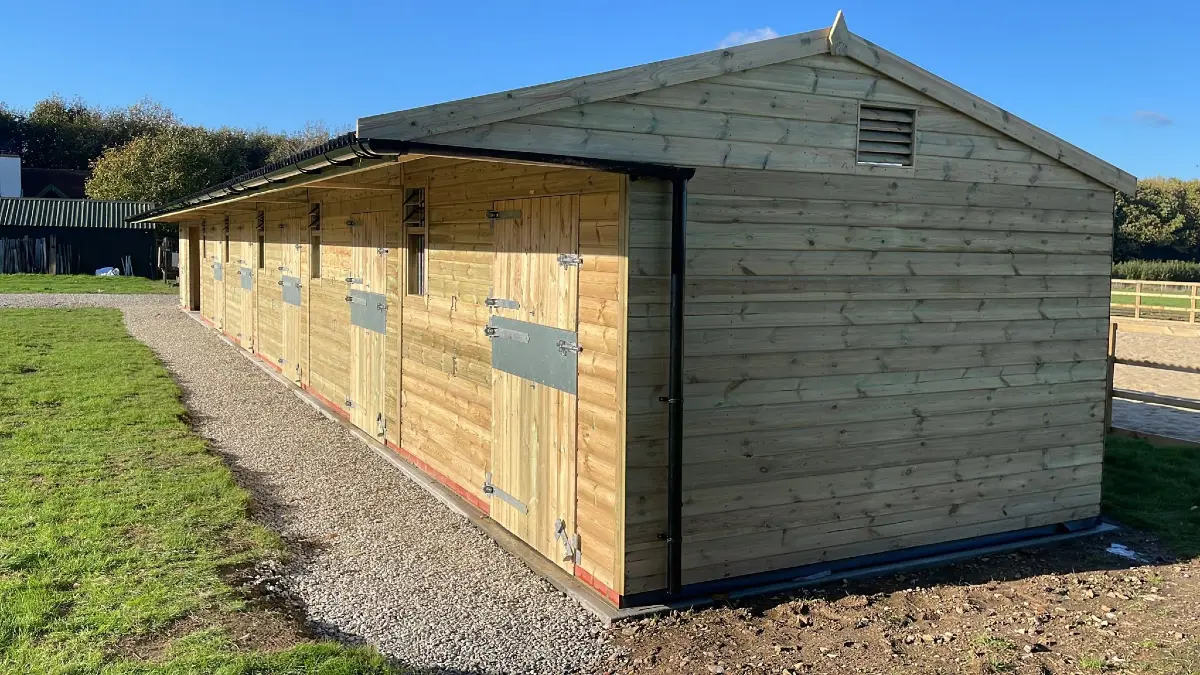
Adequate ventilation in horse stables is essential. Fresh air must circulate in the building year-round to help manage the temperature and keep respiratory problems, such as equine asthma, at bay.
To create extra ventilation, you can add stable doors, windows, openings, talk grilles, and air vents. These can increase airflow. However, you cannot compensate for the lack of height - the eaves still need to be placed 0.6m-0.9m (2-3”) above the animal’s ears.
A good stables design can help your animals feel more relaxed and connected, preventing depression.
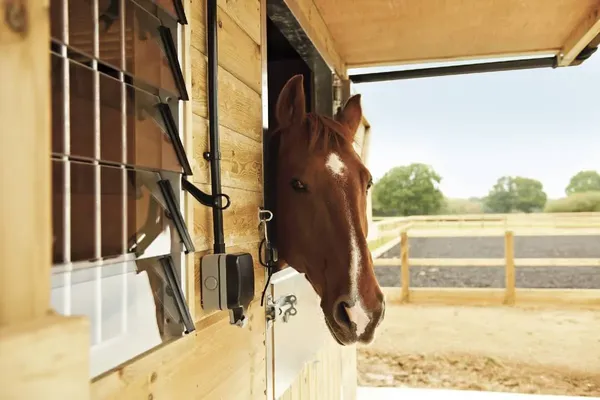
Horses have an inherent need to interact socially with each other. Features such as talk grilles allow horses to see each other and interact from their stalls. Make sure to add talk grilles to your final design draft.
Moreover, to keep stress at bay, horses should be able to walk around the stables without touching the other animals. Ensure the passageways of your future stables are wide enough to allow for this.
Well-designed horse stables will also offer adequate weather protection without compromising the all-important ventilation of the building.
A generous canopy allows the animals to spend time with their heads out of the building, looking out and breathing fresh air while sheltering them from rain, sun, snow, and hail.
Additionally, top doors, which you can close to keep the sun out when the animals are out and about in the field, are standard.
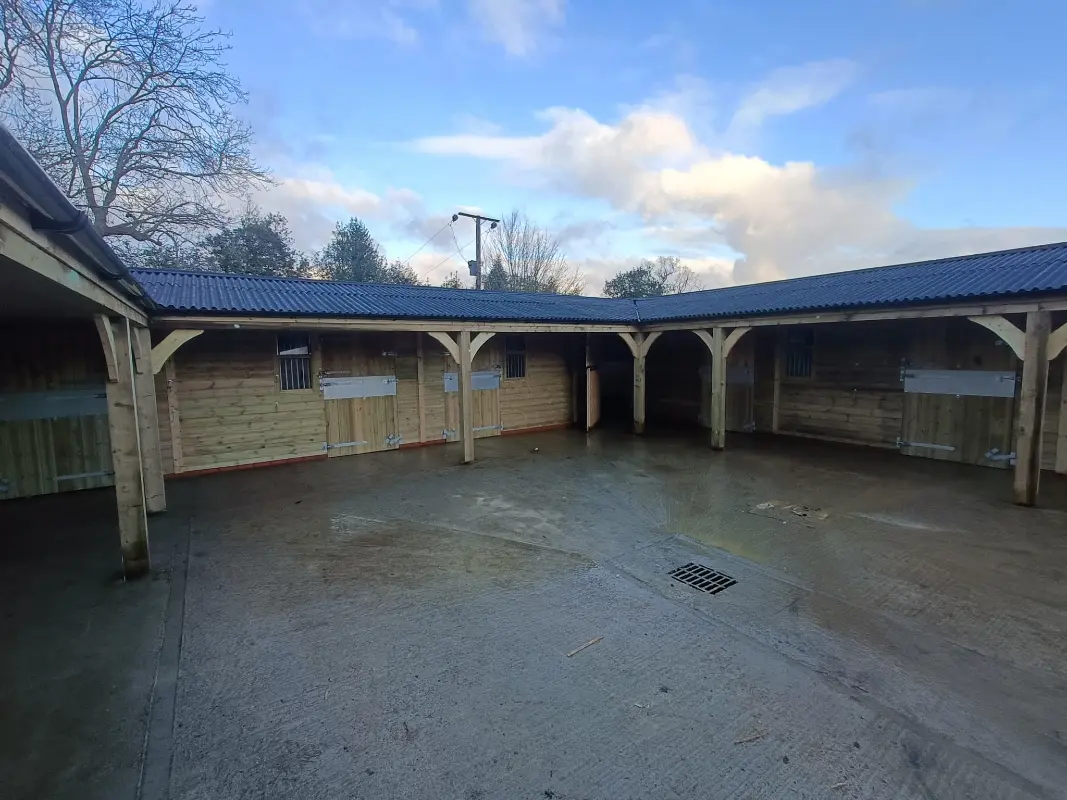
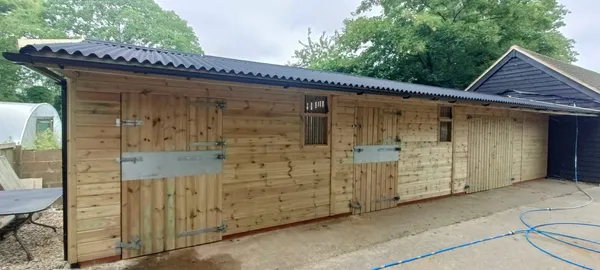
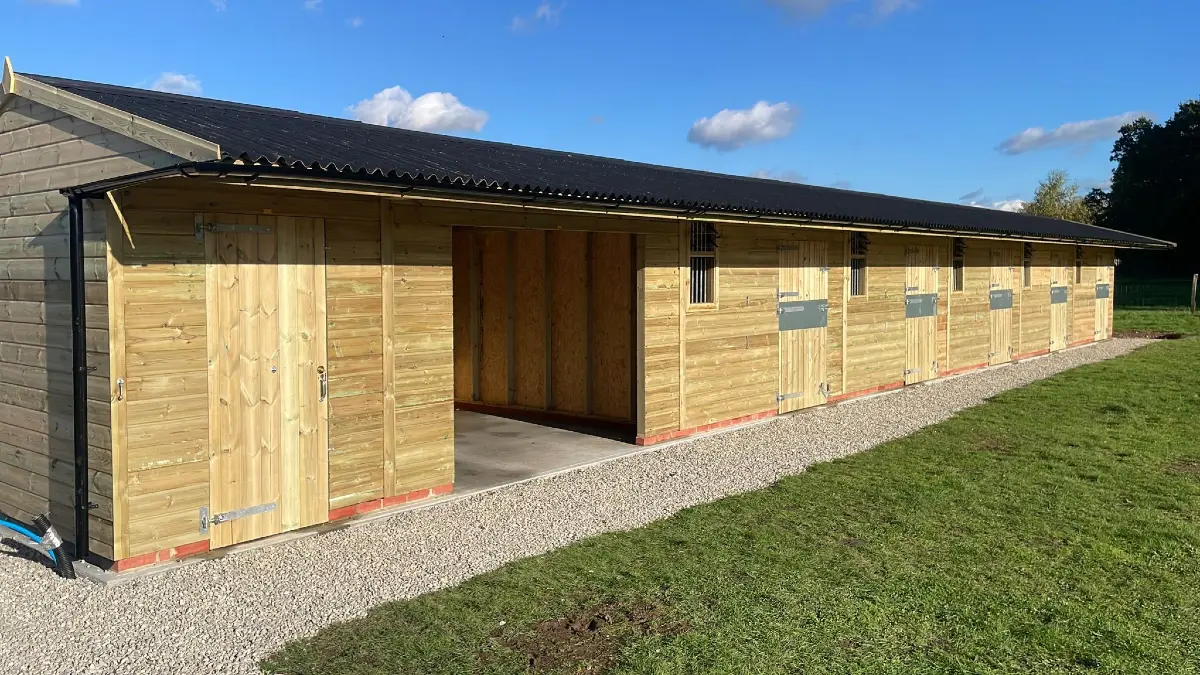
At Chart Stables, we offer three ranges of timber stables: Clipper Stables, Chart Stables, and Chester Stables. While the dimensions and features vary slightly across the ranges, all buildings are made using robust timber framing.
The exterior of the buildings is covered with thick pressure-treated exterior cladding. All ranges feature 1.2m (4’) kickboards on the internal walls, talk grilles (optional on the Clipper range), ample canopy, and generous eaves height.
Chester Stables can accommodate larger animals, as they have an eaves height of 2.46m (8’1”) and 2.23m (7’4”) high doors. You can also upgrade the canopy to 1.8m (6’).
With our dedicated Chart Stables design team, you can design your stalls to your specifications and even add a wash-down bay, tack room, or hay store. Whatever your needs, our designers can help you bring your dream stables to life.