A safe stable yard gives horses and handlers enough space to move, provides good grip and visibility, and keeps everyday tasks as simple as possible.
To create a safer stable yard:
This article explains how each of these design decisions can improve safety and make daily horse care easier.
The Chartered Institute of Environmental Health’s guidance for riding establishments and livery yards highlights risks such as slips, trips, heavy lifting, kicks, bites and being trapped between a horse and a fixed structure.
For older horse owners, cleaning, leading horses and working in confined spaces can be more physically demanding.
Working with horses will always involve some risk, but good stable design can reduce avoidable hazards. The layout, flooring, door positions and available space affect how safely people and horses can move around the yard.
Water around entrances and walkways keeps surfaces damp and increases the chance of slipping, especially in winter. Concrete can also become smooth and slippery over time.
To reduce these risks:
The government’s Code of Practice for the Welfare of Horses says stable floors should be reasonably even, non-slip and designed to provide good drainage.
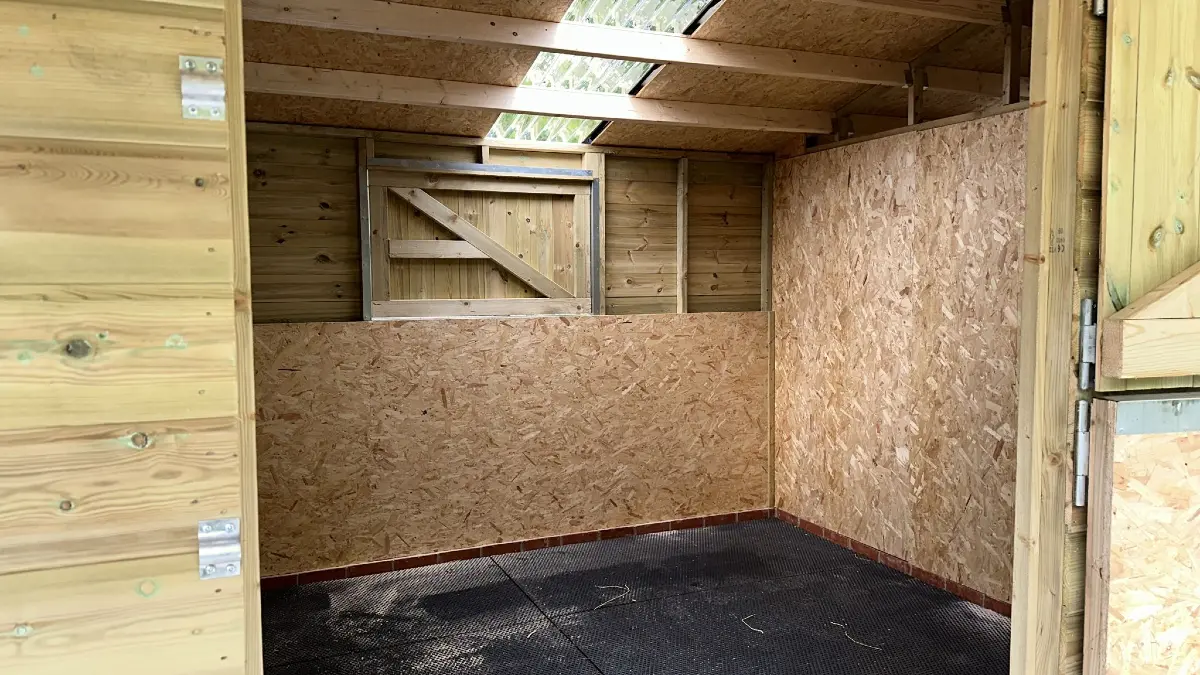
Poor lighting can lead to trips, missed steps and startled horses, especially on dark mornings and winter evenings. So plan lighting from the start.
To improve safety:
Ask a qualified electrician to fit lighting designed for stables.
Tight spaces give handlers less room to react if a horse moves suddenly and can increase the risk of kicks or being stood on
To support safer movement:
Compare straight, L-shaped, U-shaped and E-shaped options in our guide to choosing a stable block layout.
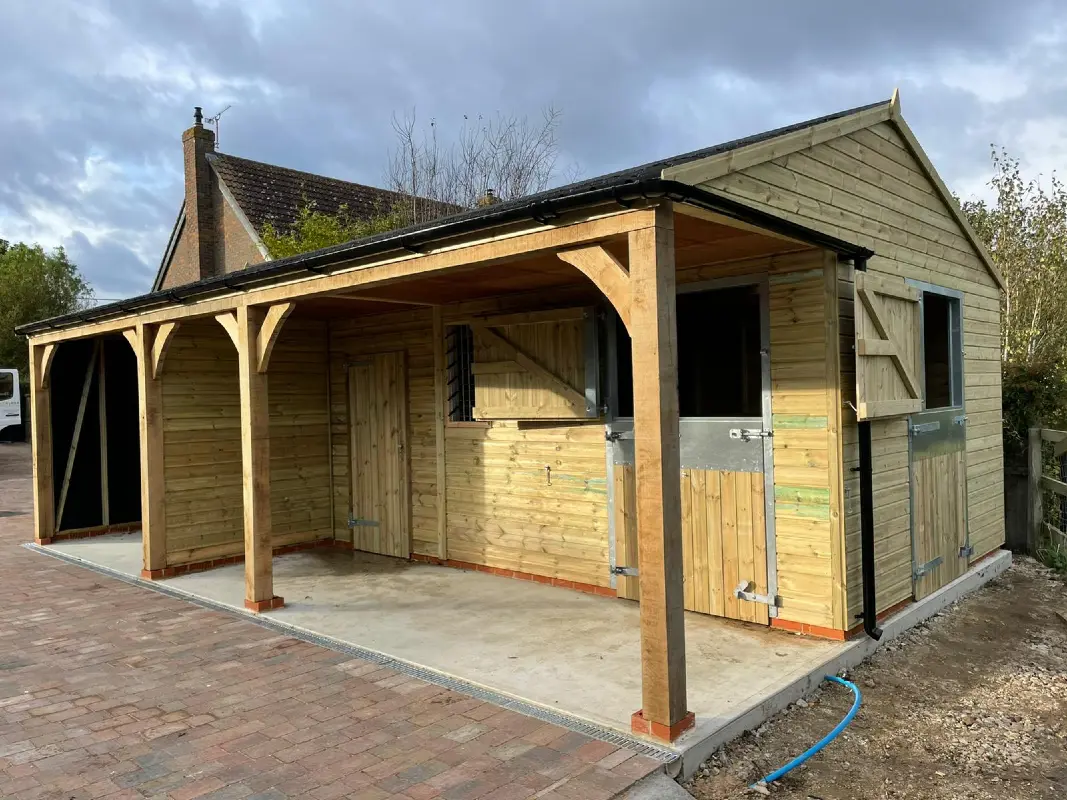
The further you need to carry water, feed or bedding, the more demanding the job becomes.
To make daily tasks less physical:
Professional rider Daniel Watson shares how thoughtful stable design can make yard routines more efficient in this article.
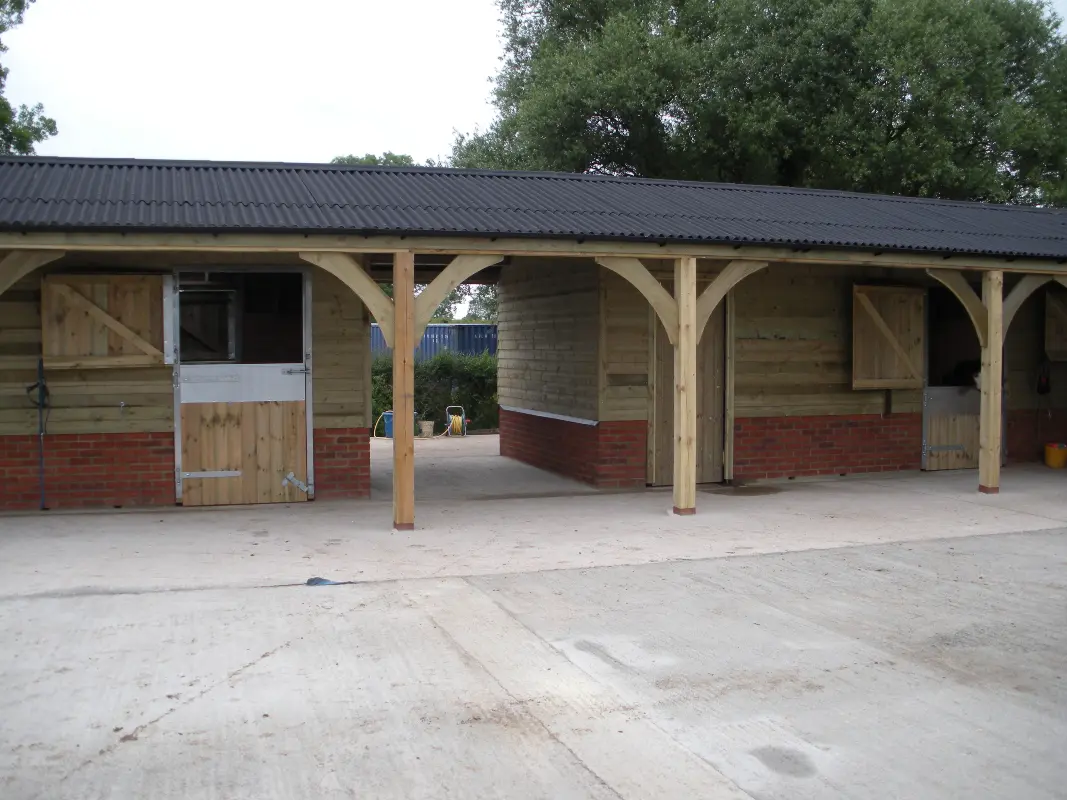
At Chart Stables, we consider safety from the first sketch. We design wooden stables that balance appearance, durability and everyday practicality.
If you are planning a new stable block or American barn, our team can guide you through the design decisions that affect safety and comfort. Explore our wooden stables, or speak to our team about a building designed around your horses, property and routine.
What is the safest flooring for a stable?
There is no single safest option for every stable. The floor should be reasonably even, slip-resistant, easy to clean and designed to drain effectively. Textured concrete with suitable bedding or properly fitted rubber matting is commonly used.
How wide should a stable walkway be?
There is no single minimum width that suits every stable layout. The walkway should allow a horse to be led safely past other horses without crowding. Consider the size of the horses, door positions, storage and the way handlers use the passage.
Should stable doors open inwards or outwards?
Stable doors should open outwards or slide across. This keeps the space inside the box clear and makes it easier for the horse and handler to leave safely.
What stable fittings can help prevent injuries?
Choose secure, low-profile latches and fittings without sharp or protruding edges. Kickboards, anti-chew strips and protected lighting can also reduce avoidable hazards.