When selecting the size, style, and location of your stables, you also need to consider how these will affect the temperature of the building. Horses are good at regulating their body temperature; however, they can suffer in both cold and heat.
For this reason, you should design and plan your stables in a way that keeps them cool in summer and warm in winter.
With summers getting hotter every year, it’s important you plan ahead of potential heatwaves to keep your animals in good health. Your stable block needs to be a safe haven where the horses or ponies can rest and be comfortable.
As the hot season approaches, keep an eye on the weather and the local humidity levels. If temperatures go over 27-30 degree Celsius and the humidity is rising, it is probably getting very hot for the animals.
There are some clear telltale signs, which indicate when a horse is too hot.
The animal is usually:
Upon closer examination you may also notice an increased heart rate and their gums are pale and dry or tacky.
If your horse is displaying any of these symptoms, move it to a shady spot and pour lots of water over his body. If the symptoms get worse (the horse looks unsteady on their feet and collapses), call the vet immediately.
Fortunately, there are many ways to reduce the temperature in your stables.
Before building the stables, look for a spot that is shaded from southerly sun and that is open to the prevailing winds for increased breeze. If you already have stables, consider planting some fast growing trees near them to provide shade.
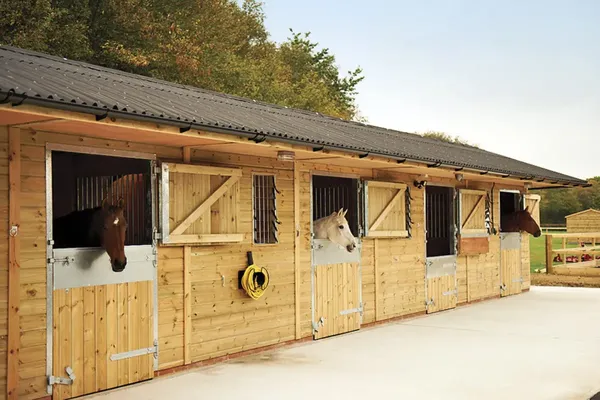
The stable block needs plentiful ventilation to allow fresh air to get through it. Opt for American barn top doors on the rear of the block to create a cooling through-draught. Open up all windows and doors to channel as much of the breeze as you can through the building. You can even install awnings and sun curtains on the windows to keep the interior in the shade at all times.
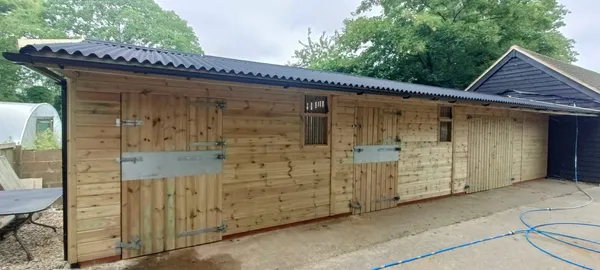
When choosing a building, make sure it features an extended canopy which will help to increase the shade. Chart Stables have a 1.2m (4’) canopy in the front as standard but this can be extended.
If you haven’t done it yet, consider insulating the building. Insulation is equally important in the summer and in the winter. It can help to keep the temperature down. You can easily add insulation to the walls, roof, and floor.
If the stalls get too hot even if you took all the precautions above, you might want to purchase and install some fans. Some inland areas don’t get a lot of wind, unfortunately, so creating a draft can be challenging. Having multiple fans around the stables will allow fresh air to circulate and hot air to be pushed out of the building.
If your budget allows for it, you could invest in a ventilation system. This will help prevent mould and condensation year-round.
In winter, you will need to trap as much warmth as possible inside the building, especially on those colder days.
As mentioned before, horses are good at regulating their body temperature, so unless the weather is regularly very cold (under 0 degrees Celsius) in your area, you do not need to install a heater. If your horses are too cold, you will notice, as, just like humans, they shiver. Put a rug on them and offer extra feed.
There are five things you can do to maintain a comfortable temperature inside your stable block in the colder months.
Choosing the right location is key. The building needs to be sheltered from northerly and easterly winds. A sunny spot is ideal, as the sun will help raise the temperature of the interior during the day.
The best way to keep the warmth inside the stables is to have closable top doors and windows. When it gets cold, close them up. That said, don’t prevent all forms of ventilation, as this will lead to mould. Horses need fresh air to stay in good health.
Opt for kickboarding to be installed to the eaves’ height which wiill add an extra layer of insulation and reduce draughts.
Insulation is a really good way to keep your stables warm. It will help the building retain more heat, especially at night.
You can increase insulation by laying mats on the floor and increasing the depth of your bedding - we may all prefer mucking out shavings, but it’s hard to beat a deep, straw bed for warmth and comfort.
Unfortunately, as you’ve seen above, keeping stables cool in summer and warm in winter is challenging. For example, if you live in a windy area, you want the stables to be sheltered in the winter and in a breezy spot in the summer.
One solution to this problem may be to opt for mobile stables - these do not have any foundations or footings, so they can be easily moved around a field, based on the season. The other advantage of opting for mobile stables is that, in most cases, they do not require planning permission. Moreover, you will not need to carry out any groundworks, which means you can build them quickly.