The best place for stables is on firm, level and well-drained ground, with safe access to paddocks, vehicles and essential services. The site should also offer protection from harsh weather without restricting natural light or airflow.
The right position will depend on the shape of your land, your daily routine and any planning restrictions affecting the property.
Look for a site that:
Suitable ground conditions are essential. Ideally, horse stables should be positioned on firm, well-drained ground.
Areas that naturally stay dry tend to remain cleaner and easier to maintain throughout the year.
Low-lying or soft ground, on the other hand, can quickly become muddy, exposing the timber to constant moisture. Over time, this can increase the risk of rot and lead to more maintenance.
Fixed stables need a suitable base. Our guide to laying stable foundations explains how to prepare one.
The stable block’s orientation influences how comfortable the space feels and how well the building performs throughout the year.
Where possible, position stables so that the doors are sheltered from the strongest prevailing winds, which can carry driving rain. This helps reduce draughts inside the boxes and keep the area in front of the stables drier.
Sunlight also plays a role. Natural light at the front of the block can help keep the area brighter and drier during the day while the boxes still provide shade and shelter.
Orientation can also influence natural airflow. Positioning the stable block where breezes can move across the front or along the side of the building helps fresh air circulate through the boxes and reduces dampness inside. Avoid placing the stables in areas tightly enclosed by buildings or dense planting.
It also helps to consider how easily horses can move between the field and their boxes.
Positioning the block close to the main turnout paddocks reduces the distance horses need to be led each day.
Short, straightforward routes make turnout, bringing in, and handling safer and easier to manage, especially during winter or wet conditions.
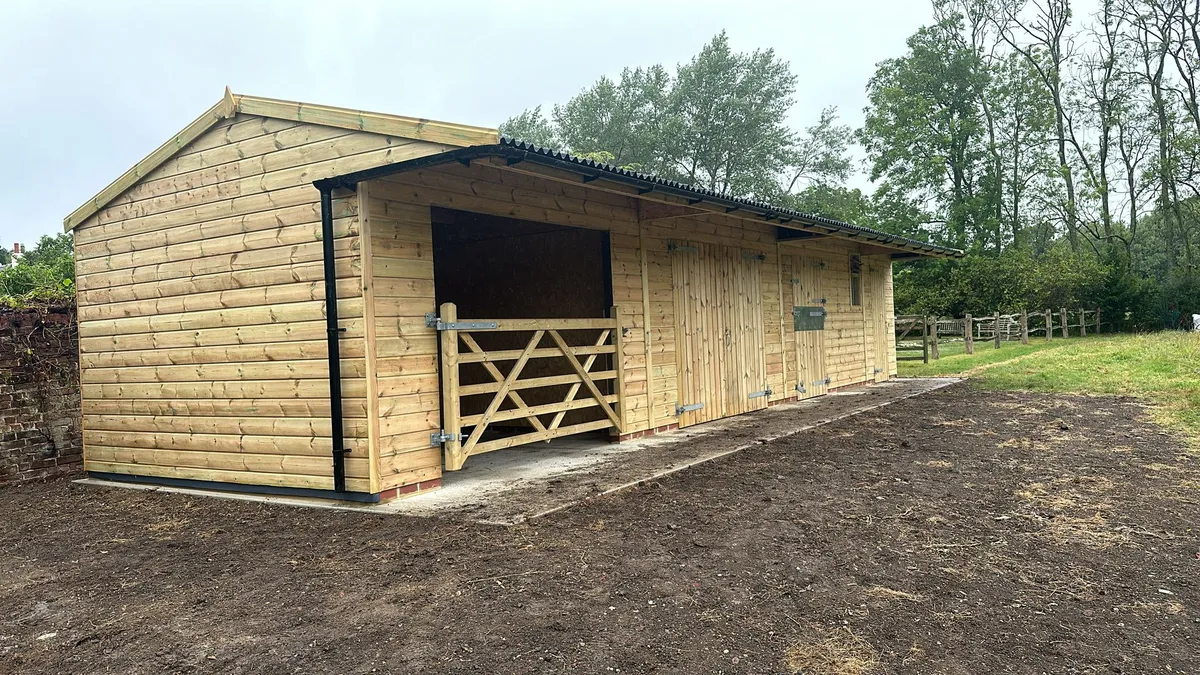
The location should also be easy to reach from the property entrance. Good access allows deliveries, vets, and farriers to reach the stables easily.
Consider whether larger vehicles can turn safely near the block. Hay deliveries, bedding suppliers, and horseboxes often require more space than expected, so leaving room for turning and parking can prevent access problems.
The stables' location should also take into account neighbouring properties and local planning rules.
Positioning them close to boundaries or houses can sometimes create noise or smell issues and make it harder to obtain planning permission.
It can also help to consider how visible the block will be from neighbouring properties and public areas. If possible, position them so they are screened by existing trees, hedges, or natural features of the land.
In some cases, positioning stables close to existing buildings can reduce their visual impact by avoiding development spread across the land. However, your Local Planning Authority will assess the full proposal.
Our guide to planning permission for stables explains the main rules and what to check before building.
Finally, think about how your yard might evolve over time. Many owners start with a small number of horse stables and add additional boxes, storage, or shelter later.
Leaving some open space around the stable block allows the layout to adapt if your needs change. It makes it easier to add features such as a tack room, feed store, or extra turnout areas.
You should also choose a block shape that leaves room for future expansion. Compare straight, L-shaped, U-shaped and E-shaped options in our guide to choosing your ideal stable block layout.
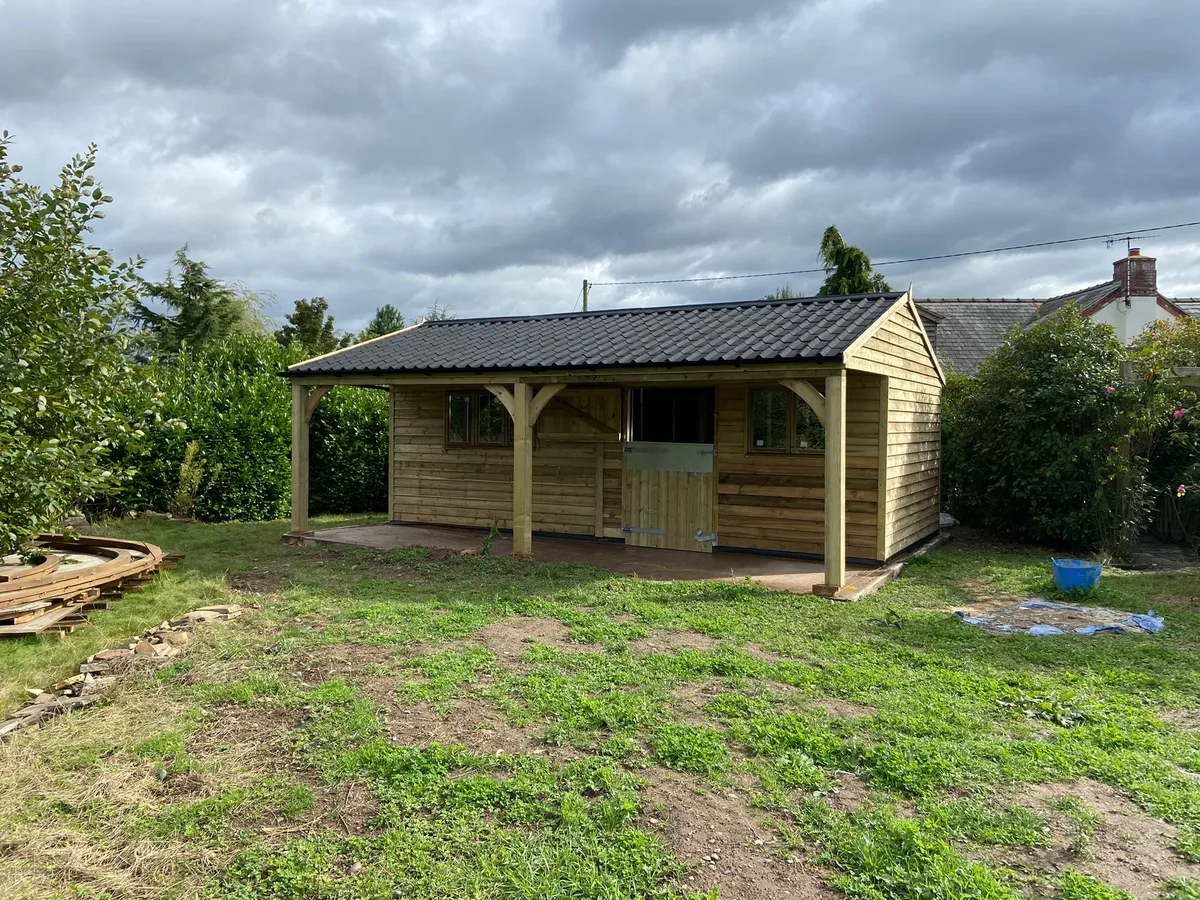
If you are planning a new stable block, Chart Stables can help you think through the layout and positioning so the buildings work well with your land.
Our team can recommend practical timber stable layout options based on your property and how you plan to use the building.
You can start by designing your own timber stables to request a quote, or get in touch with our team for practical advice.
Which way should stables face in the UK?
There is no single direction that suits every site. Position stable doors away from the strongest prevailing winds and driving rain while allowing natural light and fresh air into the boxes.
How far should stables be from a house?
There is no standard distance that applies to every property. Leave enough space to limit noise, smells and disturbance, and check whether your Local Planning Authority has any specific requirements.
Should stables be close to the paddock?
Keeping stables close to the main turnout areas can make leading horses in and out safer and quicker. Choose a direct route with firm ground, good drainage and as few tight corners as possible.
Can you build stables on sloping ground?
You can build stables on sloping land, but you will need suitable groundworks to create a firm and level base. The site must also drain effectively without directing water into the stables or surrounding yard.