Choose stables if your horses need individual care, regular overnight accommodation or greater protection from the weather. Choose a field shelter if your horses live outside for much of the year and need the freedom to move between the shelter and paddock.
Field shelters
Horse stables
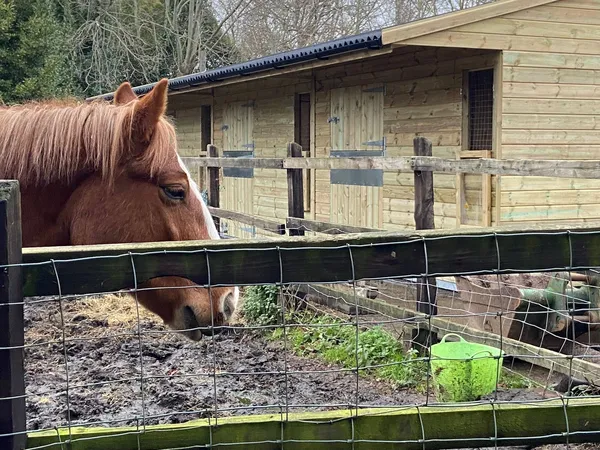
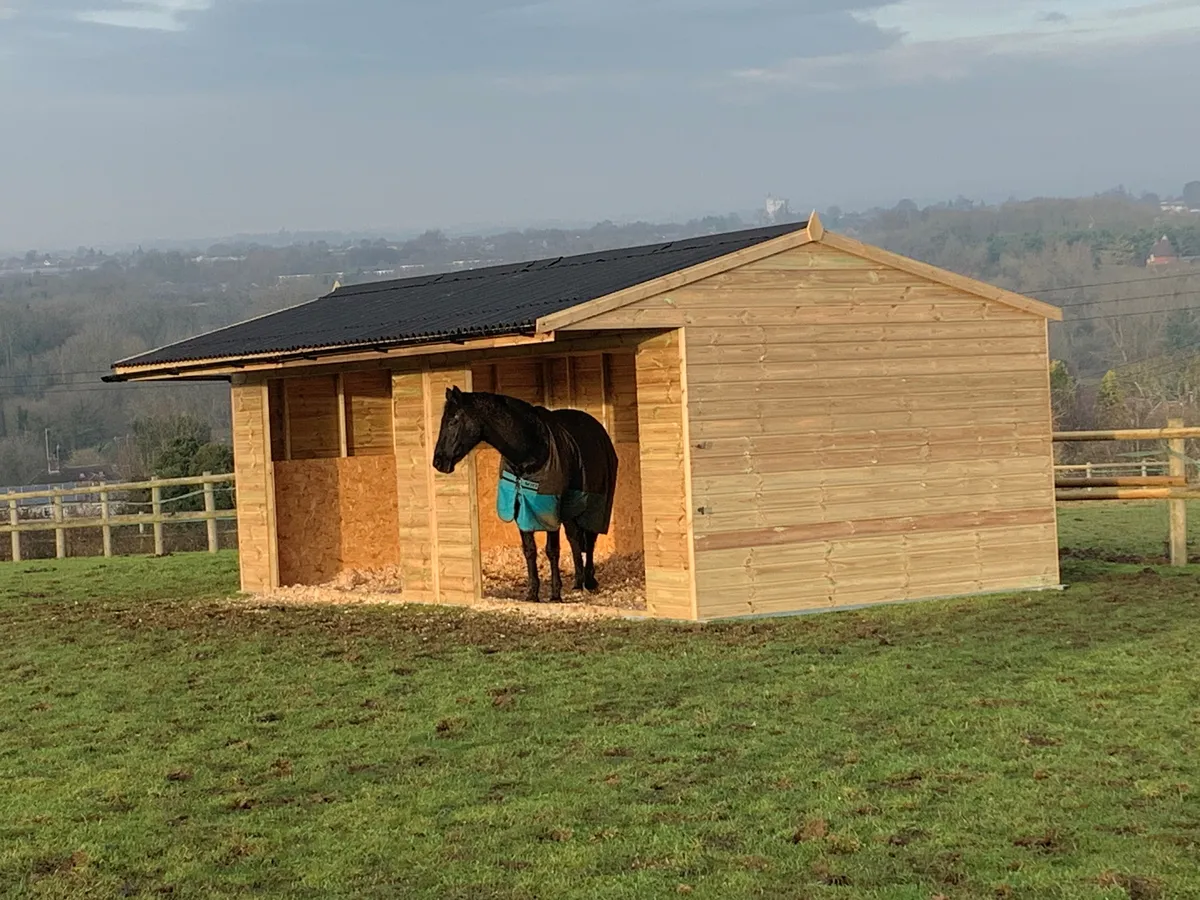
A field shelter is a simple structure placed in a paddock to provide horses with protection from wind, rain, and strong sunlight.
Field shelters feature three enclosed sides and an open front, allowing horses to move in and out freely. They can be fitted with a gate for temporary enclosure.
Inside, horses share a large space, which makes them suitable for animals that get on well together.
There are two main types of horse field shelters: mobile and fixed.
Mobile field shelters can be moved around the field when needed. They are often mounted on skids so owners can reposition them with a tractor or vehicle. Moving the shelter occasionally helps prevent the ground around it from becoming muddy or heavily worn.
Mobile field shelters are most commonly used where horses live out for much of the year, rather than going back to their boxes every night. They can step inside the shelter during heavy rain, strong wind, or intense sun, then move back out to graze once conditions improve.
Fixed field shelters, on the other hand, are permanent structures anchored to a base or foundations. They are often built with heavier framing and can offer a more robust, long-term solution.
A fixed shelter is often the better option where the field layout is permanent, and horses regularly use the same turnout area. For example, it can be positioned close to a gateway, water supply, or feeding point where they naturally gather.
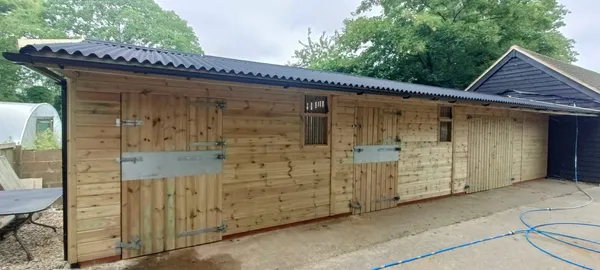
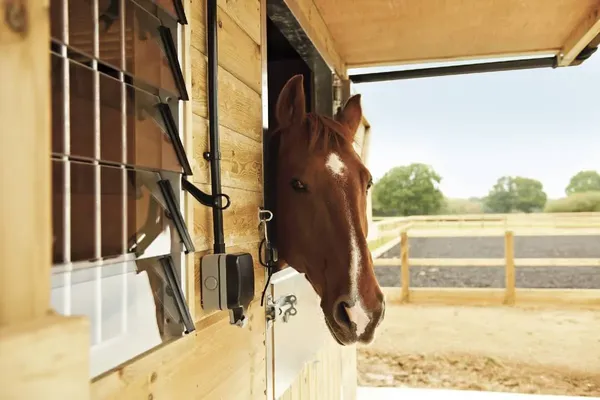
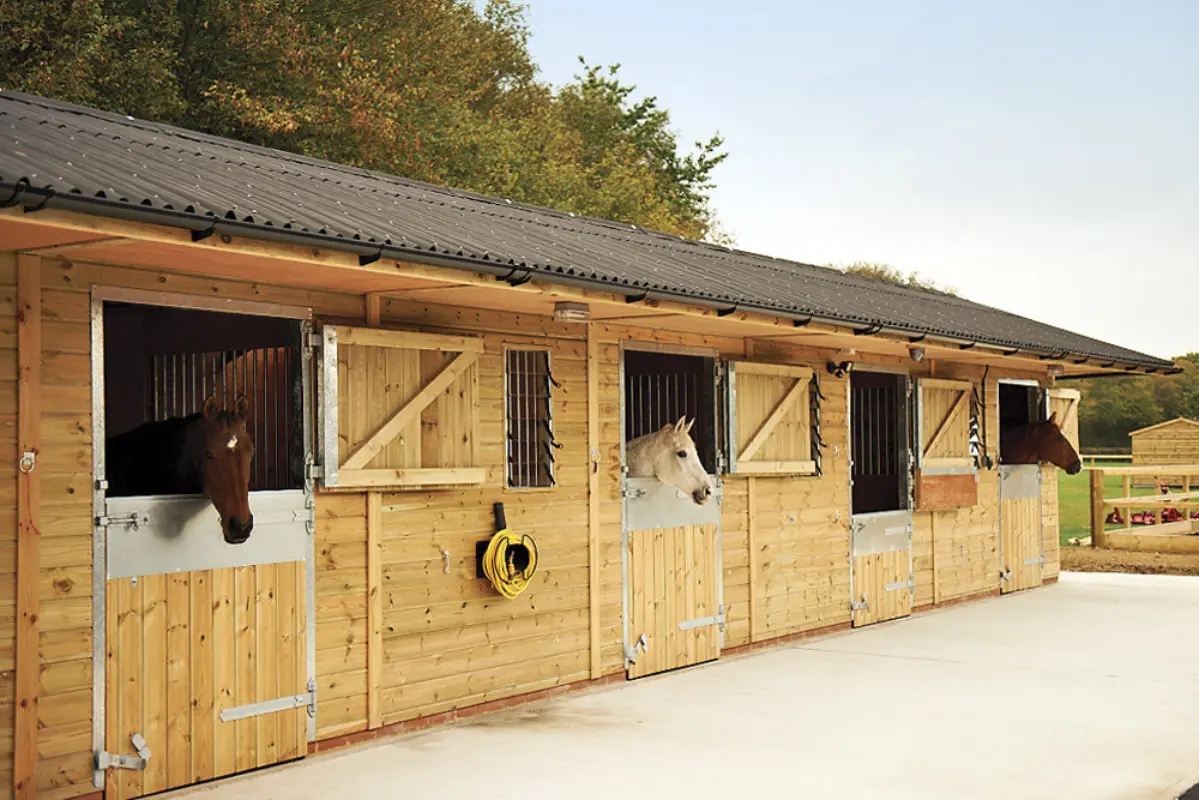
Horse stables are enclosed structures designed to house horses individually. Unlike field shelters, stables are divided into separate lockable boxes, each with its own space for resting, feeding, and care.
Stables make it easier for owners to manage feeding, bedding, grooming, and health checks. They also provide more complete protection from wind, rain, and cold weather, which is especially important when animals need rest or close supervision.
There are two main types of horse stables: mobile and fixed.
Mobile stables are designed to be repositioned around a field or yard when required. Like mobile field shelters, they are mounted on skids. This allows owners to move the stables from time to time so the same area of ground is not constantly in use.
Mobile stables are often used where horses live out for much of the year but occasionally need to be brought in.
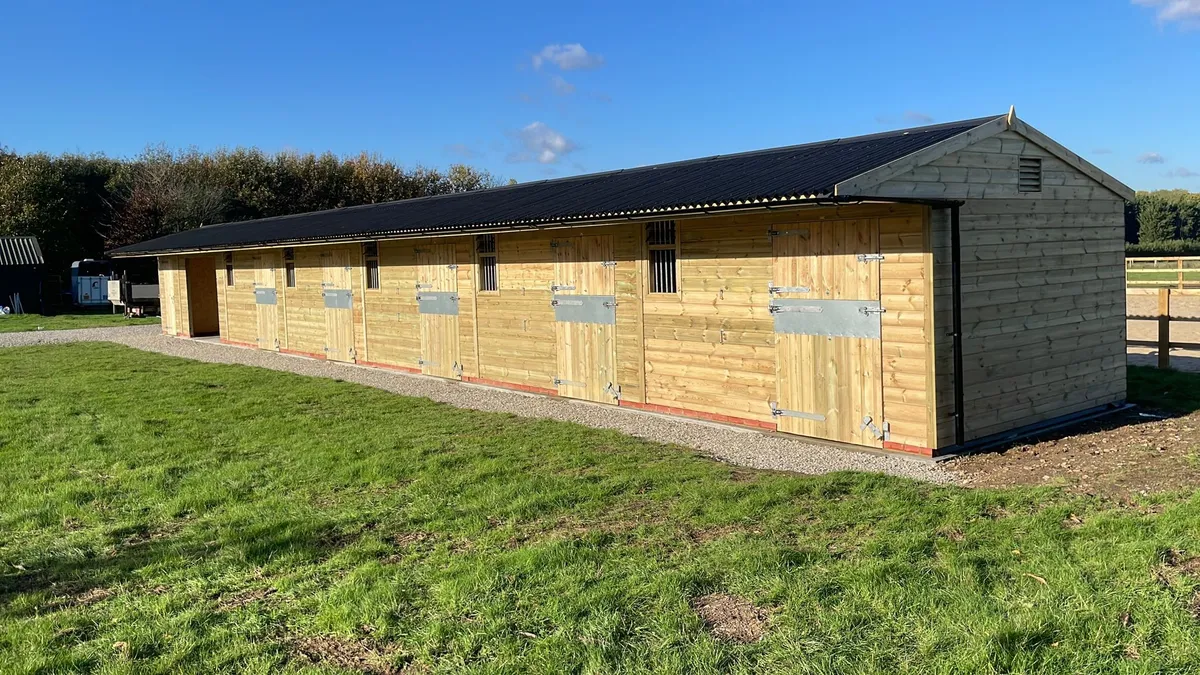
Fixed stables, by contrast, are permanent structures installed on prepared bases or foundations. They are usually constructed with heavier framing and more durable materials.
Fixed stables are the best option when horses need regular stabling. They can be positioned close to tack rooms, feed stores, or yard areas, making daily management more practical and efficient.
In many cases, horses can live outside with access to a field shelter for weather protection.
However, there are times when bringing a horse into a stable is useful or necessary; for example:
For these reasons, many horse owners build both field shelters and stables.
The British Horse Society recommends a shelter approximately 3.65m (12ft) deep and 3–3.65m (10–12ft) wide for one horse. Add around 1.5m (5ft) of width for each additional horse.
A field shelter should be large enough for horses to enter, turn, and stand comfortably without crowding. If more than one horse will use the shelter, there should be enough space for them to move in and out freely.
A shelter that is too small can lead to problems. Horses may compete for space, and more dominant animals may block the entrance, preventing others from using it.
For this reason, many owners choose a larger shelter. A wider opening also helps reduce the risk of horses becoming trapped or pushed aside when entering or leaving.
Yes. Horses that live outside should have access to suitable shelter during winter.
Many healthy horses with a good winter coat cope well with cold temperatures. However, wind and prolonged rain can make it harder for them to maintain body heat. Shelter allows them to step out of the weather and stay drier and more comfortable.
For horses that live out, a field shelter offers a place to escape strong winds and heavy rain while allowing them to move freely around the field. In some locations, a hedge or tree line may also provide cover.
Older, clipped, underweight or unwell horses may need additional protection or time inside during harsh conditions. Consider each horse’s individual needs and monitor them closely as the weather changes.
At Chart Stables, we design and build practical timber stables and field shelters - both mobile and fixed - to handle everyday yard use. Our buildings use solid structural framing and pressure-treated timber for strength, durability and weather protection.
We can also help you plan the layout of your buildings, whether you need a field shelter for horses living out, a stable block for daily management or both.
Contact the Chart Stables team to discuss your horses, land and plans for your yard.
Do I need planning permission for a field shelter?
You will usually need planning permission for a fixed field shelter. You may not need it for a genuinely mobile shelter that remains movable and is not fixed permanently to the ground. However, the rules depend on your site and how you use the building, so always check with your Local Planning Authority. Read our planning permission guide for more information.
Do horses prefer to be stabled at night?
It depends on the horse, the weather and their usual routine. Some horses settle well in a stable, while others prefer to remain outside with companions, forage and suitable shelter. Choose the arrangement that best supports your horse’s individual needs.
Do horses use field shelters?
Yes, many horses use field shelters to escape rain, strong wind, intense sunlight and flies. However, some use them more than others. Position, weather conditions and group dynamics can all affect whether horses enter the shelter.
Are field shelters cheaper than stables?
Field shelters usually cost less because they have an open design and do not contain individual boxes. However, the final price depends on the building’s size, materials, groundwork and optional features.