First, identify what may be causing the behaviour. Address the horse’s needs while protecting vulnerable timber from further damage.
To discourage wood chewing:
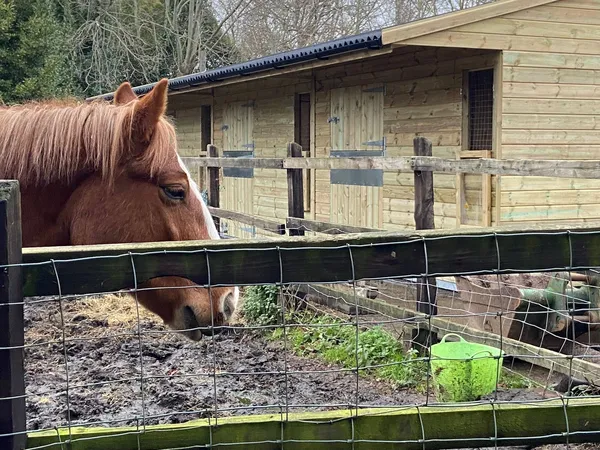
Horses may chew wood because of limited forage, boredom, stress, restricted turnout or a lack of social contact.
Horses naturally spend much of the day grazing and browsing. Those with limited forage spend less time chewing and may start biting other materials.
Long periods inside or in small paddocks can also cause boredom or frustration, especially when horses have few opportunities to move, forage or interact with others.
However, every horse is different. New or excessive wood chewing may be linked to its health, diet, teeth or environment. Ask your vet for advice rather than assuming boredom is the cause.
The British Horse Society’s guidance on stereotypical behaviour explains how management, forage, companionship and stress can affect unwanted behaviour.
No. Wood chewing and crib-biting are different behaviours, although both can damage stable doors, partitions and fences.
A horse that chews wood bites and removes pieces from the surface. A crib-biting horse grips a fixed object with its front teeth, pulls back, arches its neck and draws in air, often making a distinctive sound.
Identifying the behaviour matters because you may need to manage it differently. Speak to your vet if you are unsure or if your horse suddenly develops either behaviour.
Regular wood chewing can wear down or damage the horse’s teeth. Splinters may also become lodged in its mouth or gums and cause pain or injury.
Damaged timber can develop sharp or uneven edges that put both horses and handlers at risk. Chewing may also weaken doors, fences, partitions and other parts of the stable.
Check your horse’s mouth and the affected timber carefully. Contact your vet if the horse shows signs of pain, has difficulty eating, drops food, loses weight or develops swelling or bleeding around its mouth.
Ask your vet to check the horse and consider whether dental discomfort, digestive problems or another health issue may be contributing to the behaviour.
Review its diet with your vet or a qualified equine nutritionist. Make sure the horse receives a balanced ration and enough suitable forage for its weight, workload and health.
Do not add supplements simply because the horse is chewing wood.
Provide suitable hay, grazing or other forage so the horse can spend more time eating and chewing naturally.
If the horse needs its calorie intake controlled, ask a vet or nutritionist about safe ways to make its forage last longer. You may be able to use lower-calorie forage or a suitable slow feeder.
Make any dietary changes gradually. The BHS stable-enrichment guide offers more ideas for encouraging natural foraging behaviour.
If it is safe and suitable for the horse, increase its turnout and opportunities to move. Exercise, turnout and time outside allow horses to express more of their natural behaviour and may reduce boredom.
If injury, poor ground or another problem limits turnout, ask your vet how much controlled movement is appropriate.
Horses are social animals, so contact with compatible companions can help meet their behavioural needs.
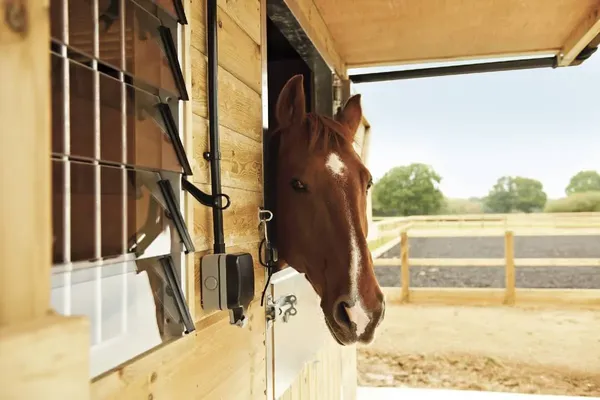
Where direct contact is not possible, position the horse where it can safely see other horses. Features such as half doors and talk grilles can provide social contact while keeping horses in separate boxes.
Our guide to the best horse stable design features explains how talk grilles and other openings can support visibility and interaction.
If your horse spends long periods inside, enrichment can help prevent boredom.
Some horses enjoy playing with a robust ball or using a forage-based enrichment product. Introduce new items carefully and make sure they cannot trap a hoof, break into dangerous pieces or become caught on stable fittings.
Bear in mind that enrichment does not replace forage, turnout or social contact.
You can apply a horse-safe anti-chew spray, paste or wash to exposed wood. The bitter taste can discourage some horses, although these products do not work for every animal and may need to be reapplied.
Only use products intended for areas around horses. Follow the manufacturer’s instructions and keep feed and water away from the treated surface.
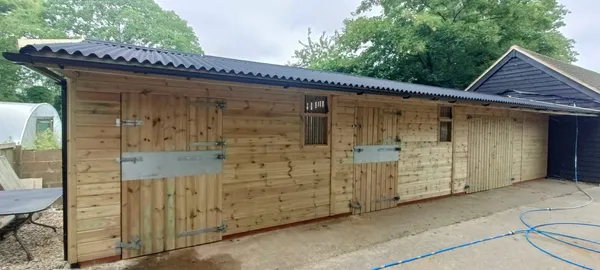
Galvanised anti-chew strips provide a more permanent barrier. Fit them over vulnerable timber edges, including the tops and sides of stable doors and partitions.
Check protected surfaces regularly for loose metalwork, sharp edges and damaged timber.
At Chart Stables, we design and build timber stables around your horses and their needs. We can fit galvanised anti-chew protection to vulnerable areas such as doors and openings, helping your building stay in good condition for longer.
These fittings protect the timber, but you should also address the reason your horse is chewing.
Explore our stable doors and windows and timber stables, or contact our team to discuss your stable design.
Will vinegar stop a horse chewing wood?
Vinegar may discourage some horses, but it is not a reliable long-term solution. Use a product designed for equestrian settings and address the reason for the behaviour.
Can a horse stop chewing wood completely?
Some horses stop when their diet, routine or environment changes, while others continue out of habit. Protect the timber and ask your vet for advice if the behaviour persists.
Should you punish a horse for chewing wood?
No. Punishment does not address the cause and may increase stress. Focus on the horse’s health, forage, turnout, social contact and environment.
Can anti-chew strips be added to existing stables?
They can often be fitted to vulnerable edges on existing stable doors and partitions. Check that the fittings are secure and leave no sharp edges or unsafe gaps.
When should you call a vet about wood chewing?
Contact your vet if the behaviour starts suddenly, becomes excessive or occurs alongside weight loss, difficulty eating, dental damage, mouth injuries or other changes in health or behaviour.