Store hay in a dry, well-ventilated building away from horses, fuel, machinery and other sources of fire. Make sure the hay is dry before it enters the barn, stack it safely and leave enough space for air to circulate and people to move around.
Correct storage protects hay from rain and damp, helping it retain its quality for longer.
Moisture can reduce the quality of hay and encourage mould to grow. Mouldy or dusty hay may not be suitable for horses, especially those with respiratory conditions.
Damp hay can also heat up after stacking. In some cases, this can create a serious risk of spontaneous combustion.
Only move hay into storage once it is dry enough. If you buy hay from a supplier, ask about its moisture and storage condition. A moisture meter can also help you check bales, but you need to use it correctly and take readings from several places.
The hay barn should prevent rain from reaching the bales while allowing warm, moist air to escape. Vent grilles, openings and good airflow around the stack can help keep the interior dry.
Do not block ventilation openings with bales. Check the roof, guttering, doors and external cladding regularly for damage or water ingress.
The British Horse Society’s stable fire guidance advises keeping hay and straw separate from stables. It also recommends storing hay in reasonably sized stacks and leaving suitable space between them.
To reduce the risk:
If you run a business or employ staff, you must carry out and record a fire risk assessment. Review it every year and whenever something changes that could affect fire safety.
Our guide to stable safety and practical yard design covers lighting, access routes, surfaces and other everyday safety considerations.
Plan the stack before the delivery arrives. You need to store the bales securely without blocking doors, ventilation or access routes.
Start with a clean, dry floor. If the floor can transfer moisture, raise the hay using strong, stable pallets or suitable supports. Check that they are sound, secure and free from sharp edges, and include them in your fire risk assessment.
Stack the bales securely so they cannot lean or fall. The safest arrangement will depend on the size, shape and weight of the bales, so follow advice from your hay supplier.
Leave enough space to:
Do not stack hay directly against electrical fittings or roof lights. Avoid making the stack so high that it becomes unstable or leaves no safe clearance below the roof.
A separate hay barn is generally the safer option. It keeps a large amount of combustible material away from horses and reduces the chance of a stable fire spreading through the hay.
Do not store loose bales in passageways, outside stable doors or along escape routes. Even a small number of badly positioned bales can obstruct evacuation and add fuel to a fire.
The British Horse Society advises keeping hay and straw separate from stables and states that animals should not share a barn with hay, straw and vehicles.
If your current stable layout includes hay storage, ask a competent fire-safety professional to assess it. They can advise you on fire separation, access, alarms, electrics and escape routes.
Storage should form part of the wider yard plan. Our guide to choosing your ideal stable block layout explains how to plan tack rooms, hay stores and other practical facilities.
The space you need depends on how many horses you keep, how much hay they use and how often you receive deliveries. For example, a yard that receives hay every month needs less storage than one that buys its full winter supply at once.
Bale dimensions and weights also vary, so one standard annual figure will not suit every yard.
Start with your current use:
Also consider whether you need space for straw or other bedding. Store each material separately and do not overload the building.
A hay barn may need to accommodate future changes, such as more horses, larger bales or less frequent deliveries. Planning some spare capacity can make the building more useful over time.
A static hay barn provides permanent storage and can form part of a wider yard plan. It will usually need a suitable base, and you may need planning permission depending on its size, position and use.
A mobile hay barn sits on skids and can be repositioned when necessary. This may suit rented land, changing yard layouts or sites where permanent groundworks are not appropriate.
Bear in mind that mobile does not automatically mean planning-exempt. Your Local Planning Authority will consider the building’s construction, use, position and degree of permanence. Our guide to planning permission for stables and mobile buildings explains the main considerations.
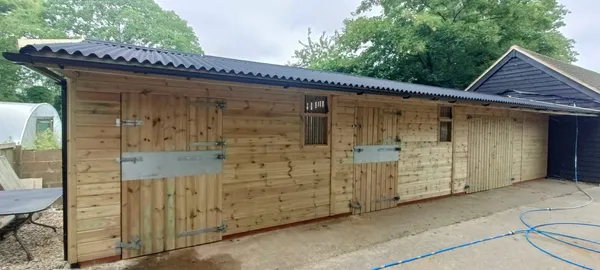
Chart Stables builds static and mobile timber hay barns for equestrian properties.
Our small static hay barn measures 3.6m × 3.6m and includes double doors as standard. You can also choose options such as single doors and vent grilles to suit your access and ventilation requirements.
If a permanent building does not suit your site, we can also design a mobile hay barn with skids and optional weather protection.
Every yard is different, so we can help you choose a size and layout based on your storage needs, access and available space.
Explore our small hay barn or contact the Chart Stables team to discuss your project.
How long can hay be stored?
There is no single storage limit. Hay can remain usable for months if it stays dry and well ventilated, but its quality may fall over time. Check it regularly for damp, mould, dust and unusual smells.
What should you do if stored hay feels hot?
Unusual heat or a caramel-like smell can mean that the hay is heating. Keep people and animals away. If you see smoke, notice charring or suspect a fire, leave the building and call 999. Do not move the stack yourself.
Can you install lights in a hay barn?
Yes, but a qualified electrician should install and regularly check them. Keep bales away from lights, wiring and other electrical fittings.