Choose a safe, sheltered position with clear access for moving the building. The right position can change throughout the year as the weather and ground conditions change.
Look for a position that:
Start by looking at which direction the strongest winds cross your land. Nearby buildings, hedges, hills and the shape of the field can all affect them.
Where possible, place the enclosed back of the shelter towards the prevailing wind. This protects the open front from strong draughts and driving rain.
Do not choose the position by compass direction alone. A south- or west-facing opening may receive more winter sun, but it could also face strong south-westerly winds. Watch how the weather moves across the field before deciding.
Hedges and tree lines can provide useful shelter, but make sure they are safe for horses and do not block the route needed to move the building.
Choose firm, well-drained ground where water does not collect after heavy rain. Low areas can quickly become muddy, making the shelter harder for horses to use and more difficult to reach with a towing vehicle.
Check the ground around the entrance regularly. Horses using the same route can soon turn soft ground into mud. Move the shelter before the area becomes badly poached to reduce damage and spread wear across the paddock.
Avoid towing the shelter across waterlogged ground, as the vehicle may lose traction, become stuck or damage the field.
Permanent stables need a fixed base, so their location requires different planning. Our guide to choosing the best location for horse stables explains what to consider when positioning a permanent block.
Horses need protection from strong sun as well as wind and rain.
In summer, place the shelter where it provides shade during the hottest part of the day. Bear in mind that natural shade moves as the sun crosses the sky, so check the field at different times.
Nearby trees can provide useful shade, but make sure they are safe for horses and avoid weak or overhanging branches. Falling branches and debris could damage the roof or frighten the horses.
In winter, choose a drier, more sheltered position that protects the opening from prevailing winds and driving rain.
See how a Kent customer used a double mobile field shelter for three horses across separate summer and winter fields.
For more advice on managing horses during warm weather, read our guide to keeping horses cool in summer.
Before choosing the location, plan how you will move the shelter.
You will need:
Check the ground and route every time you move the shelter. Conditions may have changed since the previous move, especially after heavy rain.
Inspect the skids, towing chain and fittings before you move the building and keep horses away while it is moving.
A mobile shelter gives you more flexibility when rotating paddocks and managing pasture.
Leaving the shelter in one place for too long can create worn or muddy ground around the entrance. Moving it helps spread the wear and gives damaged areas time to recover.
There is no set schedule. How often you move the shelter will depend on:
Plan the next position before the ground becomes too wet for the towing vehicle. It is easier to move a shelter while the access route remains firm.
Place the shelter where horses can enter and leave without passing through narrow or crowded areas.
It should be large enough for every horse in the field to use. The British Horse Society recommends providing enough shelter for the whole group.
Consider how the horses behave together. A dominant horse may stand across a narrow entrance and prevent others from getting in or out. A wider entrance or more than one opening may make it safer for horses to come and go.
Keep water and feeding points away from the entrance to prevent crowding.
Watch how the horses use the shelter and make changes if one regularly blocks the others.
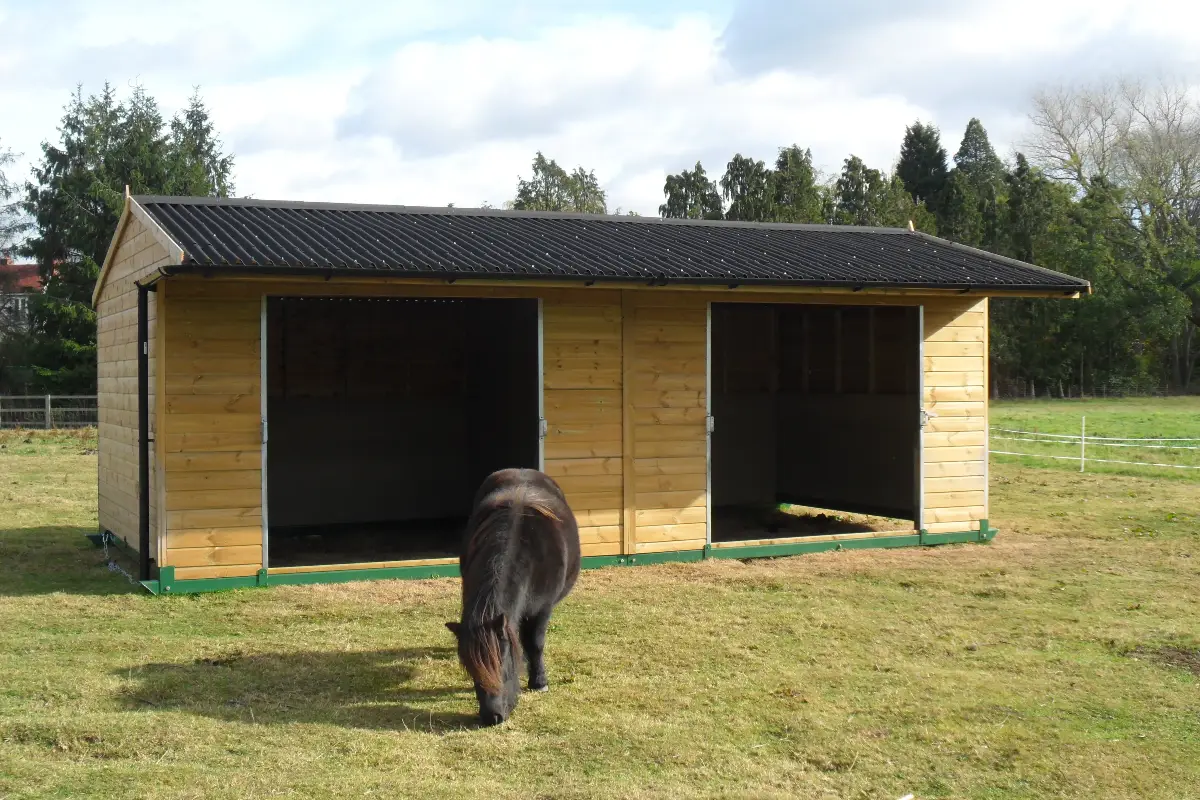
At Chart Stables, we build strong timber mobile field shelters in a range of sizes and configurations. You can choose timber or galvanised metal skids, depending on the model, ground conditions and how often you plan to move the building.
Our mobile field shelters include a heavy-duty towing chain and can be tailored with features such as internal partitions, slip rails and different roofing options.
Explore our mobile field shelters, read about the cost of a mobile field shelter or contact our team to discuss your land and horses.
Which way should a field shelter face?
There is no single compass direction that suits every field. Position the enclosed back towards the prevailing wind where possible so the opening is protected from driving rain. Also consider sunlight, nearby shelter and local ground conditions.
How often should you move a mobile field shelter?
There is no fixed schedule. Move it according to the ground conditions, pasture wear, weather and your paddock rotation plan. Ask your Local Planning Authority whether it has any specific requirements for demonstrating that the shelter remains mobile.
Do mobile field shelters need planning permission?
A genuinely movable field shelter may not need planning permission, but the rules depend on its construction, position, use and degree of permanence. Always check with your Local Planning Authority before installing one. Our guide to planning permission for stables and shelters explains the main considerations.
Does a mobile field shelter need hardstanding?
A mobile field shelter needs firm, reasonably level and free-draining ground. It does not need permanent hardstanding. A permanent base or fixings may affect its mobile status and planning requirements, so check with your Local Planning Authority first.
Can you put a field shelter under trees?
Avoid placing a field shelter directly beneath weak or overhanging branches. Nearby trees may provide useful shade and protection from wind, but check for falling branches, poisonous species, exposed roots and other hazards.