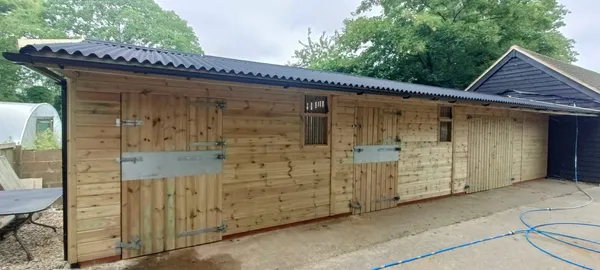
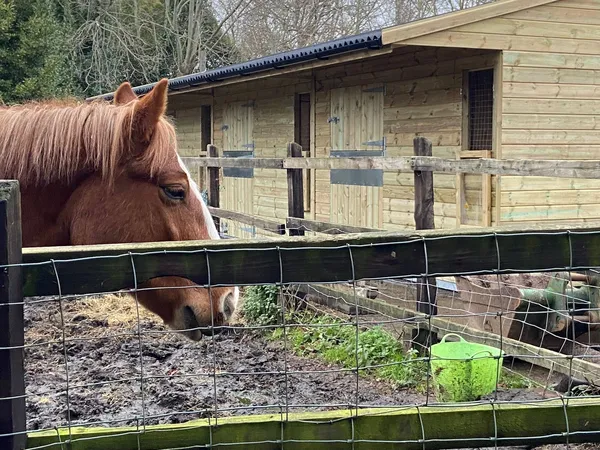
A good stable design supports horses’ need for space, ventilation, cleanliness, mental stimulation and social interaction. It should also help riders save time and manage their yard routine efficiently.
To learn how this works in practice, we spoke to professional rider, trainer and Chart Stables ambassador Daniel Watson.
Daniel is a Team GB rider who has represented Great Britain numerous times at home and abroad. He runs a breeding and training yard with his partner, Craig Messenger.
Daniel is rebuilding their agricultural barn at Fiddlers Green Stud in Kent to improve the lives of his 17 competition horses. He recently designed a new structure, drawing on his many years of experience as a rider and trainer.
Every yard’s requirements are different, so consider what you want to achieve, your routine and how you will use the building.
In this article, we share Daniel’s advice for creating a stable design that balances riders’ needs with the happiness and wellbeing of horses.

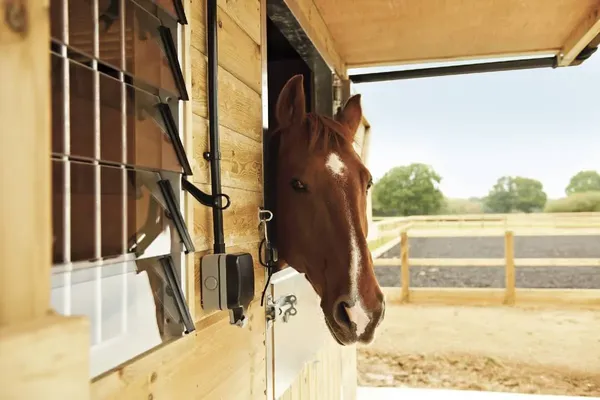
Intellectual nourishment is crucial for horses - it releases pent-up energy, reduces anxiety, fulfills their inborn curiosity, and boosts mental sharpness. For this reason, horses must be able to put their heads out their stall door and see the world; it keeps them alert and engaged. This is especially important for younger horses.
Moreover, horses are social and prey animals who live as part of a herd in the wild. That is why it is crucial they can see each other at all times. It gives them a sense of safety and promotes social interaction opportunities, fostering a more fulfilling life.
Key takeaway: Make sure your stables and stalls feature openings, windows, and internal talk grilles so your horses can look out of the stables and watch the world go by and see each other. When adding these features to your stables, consider how your animals get along and if they sometimes need privacy.
Your horses’ personalities are a critical factor in stable design. Think about how to position your animals within the yard based on their personalities and behavioural habits so you can use the available space to the best of your ability.
Here are some examples. If your horse is a biter, windsucker, or weaver, you need to place them in sturdy, visible stalls so you can check on them regularly.
If your horse gets stressed and reacts to the sight of other horses, avoid building stables in front of the outdoor arena, where they can see other horses gallop. They will find it hard to relax. If you need to build the stables next to the arena, turn them around and place the doors on the far side so the horses cannot see the action.
The horses’ purpose also matters. A competition stallion needs his own space; you would not want him to live next door to a 12.2 pony.
Moreover, as horses age, their maintenance changes as they work fewer days a week. You might want to move them to less accessible stalls.
Key takeaway: Before you settle on a design, consider your horses’ personality, behavioural habits, energy levels, purpose, age, and how they get along. You might need to adapt each stall to each animal to optimise their wellbeing.
Thoughtful design can also help horses settle and rest. Read our guide to designing horrse stables for rest and relaxation.
.avif)
Excessive heat can cause heat stress, heatstroke, dehydration, muscle spasms, and colic in horses. Make sure the stable doors do not look into the sun in the middle of the day, and maximise ventilation when choosing window and door locations.
If you can, build the stables in an area you can see from your home so you can easily keep an eye on the animals.
Moreover, the stable block must be away from roads, as traffic noise causes stress.
Finally, you should never build a stable near a river, as there is a risk of flooding, and if a horse gets out of their stables, they could fall into it. After all, a safe environment is fundamental for horses.
Key takeaway: Orient your stable block so it does not face into the sun at the hottest times of day or add a substantial canopy to protect the horses from the sun's rays. If you can, build the stables in an area you can see from your main house, so you can watch over your horses. Avoid positioning them by a road or a river.
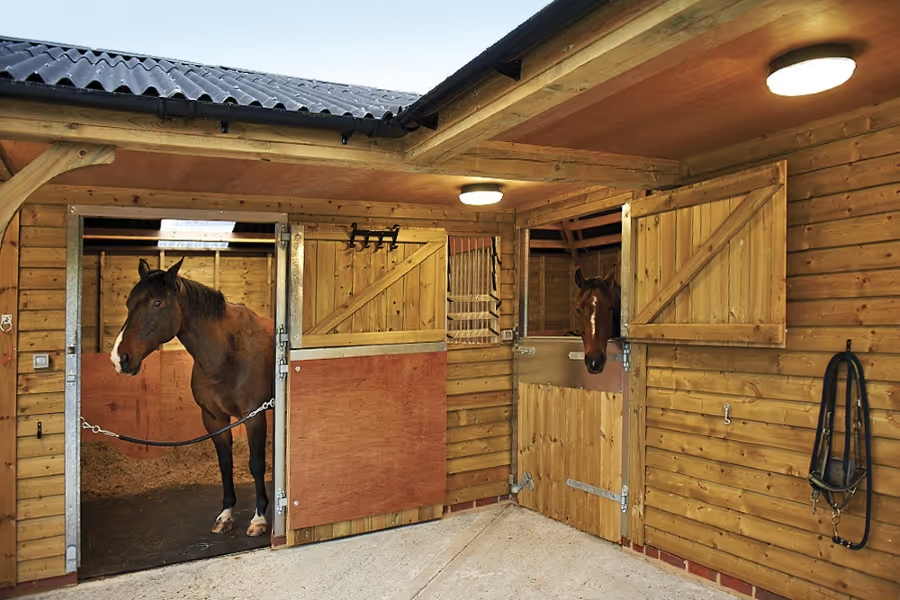
Your horses’ safety should be paramount when designing their stables. For your horses to stay healthy and thrive, your stables should:
Horses need enough space to stand, move around, and lie down. Ensure the passageways are ample so horses can walk safely past other animals. We wrote a whole article about stable size here.
To keep your horses healthy, ensure the stables have good ventilation year-round. Opt for two windows per stall, and add high-level vents near the ridge to maximise airflow. Open all windows at least once a day; this also helps keep the stables’ temperature comfortable for the horses.
As for floors, opt for rubber-mat flooring. It gives horses a similar grip to outdoor ground, so they do not slip or struggle when getting up.
Finally, keeping your stables clean reduces the risk of disease transmission.
Key takeaway: Choose stall sizes based on horse size, personality, and purpose. Ensure the stable block has ample ventilation, install non-slip floors, and clean all areas daily.
Read our horse stable size guide for recommended dimensions for horses and ponies.

You should also base your design on your yard routine. If your horses are pets you take for a ride a few times a week, design efficiency is not crucial. Spending a little extra time with them will improve your bond. If, on the other hand, you have four or more competition horses who work multiple days a week, you will need to structure the yard in a way that allows you to go about the animals’ routine efficiently.
Daniel’s yard is very user-friendly, and everything is close, so he can work efficiently, saving time and energy. For example, the wash-down section is next to the tack room and a tie-up bay, so he can quickly wash down and take the horses back to their stalls at the end of the day.
Key takeaway: Decide where to position the wash-down bay, tack room, hay store, and tie-up bay based on how efficient you want your yard routine to be.
If you care for several horses, you may also want to compare the day-to-day practicalities of an American barn and traditional stables.

Anti-chew strips and kickboards should come standard in stables because they protect the structure from damage and increase the building’s longevity. Other essential features are tie rings and windows with talk grilles
Consider installing built-in hay racks and swivel feed mangers to keep stable floors tidy and work more efficiently. Remember to position them to prevent the horses from squabbling over food.
Key takeaway: Ensure your stables feature anti-chew strips, tie-up rings, and kickboards. Add built-in hay racks and swivel feed mangers to feed your horses more efficiently and keep the floors tidy.
Would you like to learn more about the best stable design features? Head over to this article.
Designing good wooden stables is not easy; there are multiple factors to consider. That is why, at Chart Stables, all our designs are bespoke. Our team can help you choose the right shape and size block for your horses, ponies, or donkeys. Our designers can also help you decide where to locate the washdown bay, tack room, and hay store.
All our stables feature thick timber framing and pressure-treated external cladding, so they stand the test of time. Our custom features include three-piece pony doors, garage store doors, and more.
Before finalising your plans, check whether you need planning permission to build stables.
Should every stable in a block have the same design?
Not necessarily. You can adapt individual boxes to suit each horse’s size, behaviour and needs while keeping the overall block consistent.
Can you add different features to individual stables?
Yes. Depending on the design, you can choose different doors, windows, grilles, feed mangers and other features for individual boxes.
How can you future-proof a stable block?
Think about how your horses and routine might change. Allow space for extra boxes, storage or working areas if you may need them later.
Should riders help plan a new stable block?
Yes. The people who manage the horses understand how work moves around the yard and where practical areas and storage will prove most useful.